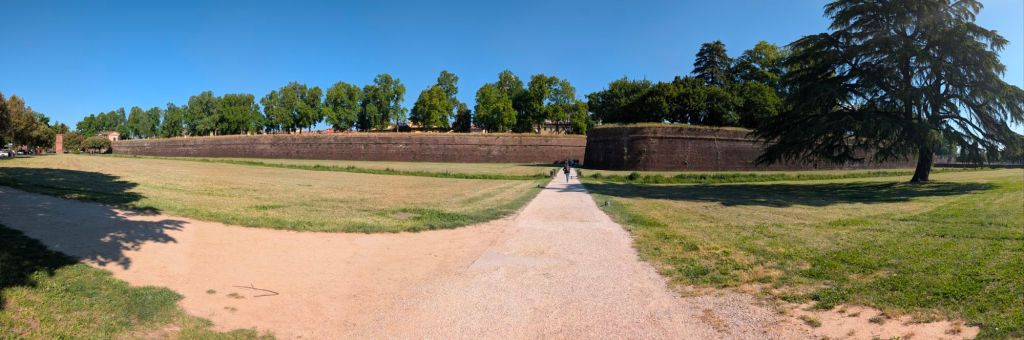
We took the train from the railway station in Monter whatever it’s called and it was absolutely crammed with young people going somewhere, all refusing to give up a seat for us old-age pensioners, kind of looking on very arrogantly. Anyway eventually we’ve arrived in Lucca and we’re presented with the city wall picture below
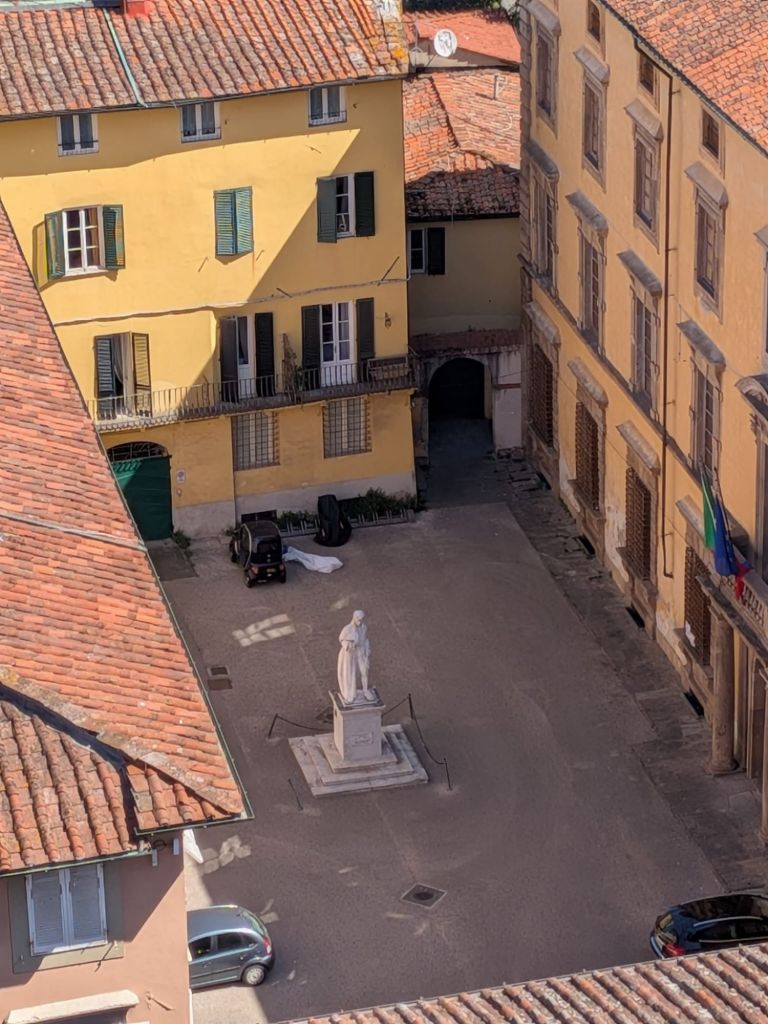
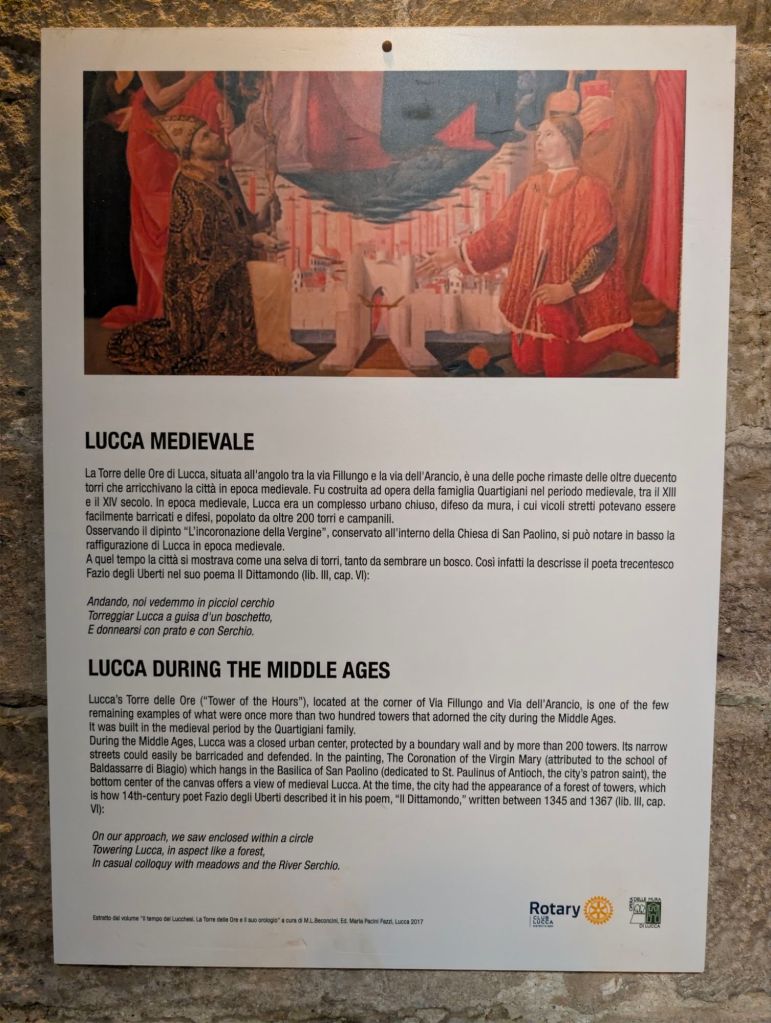
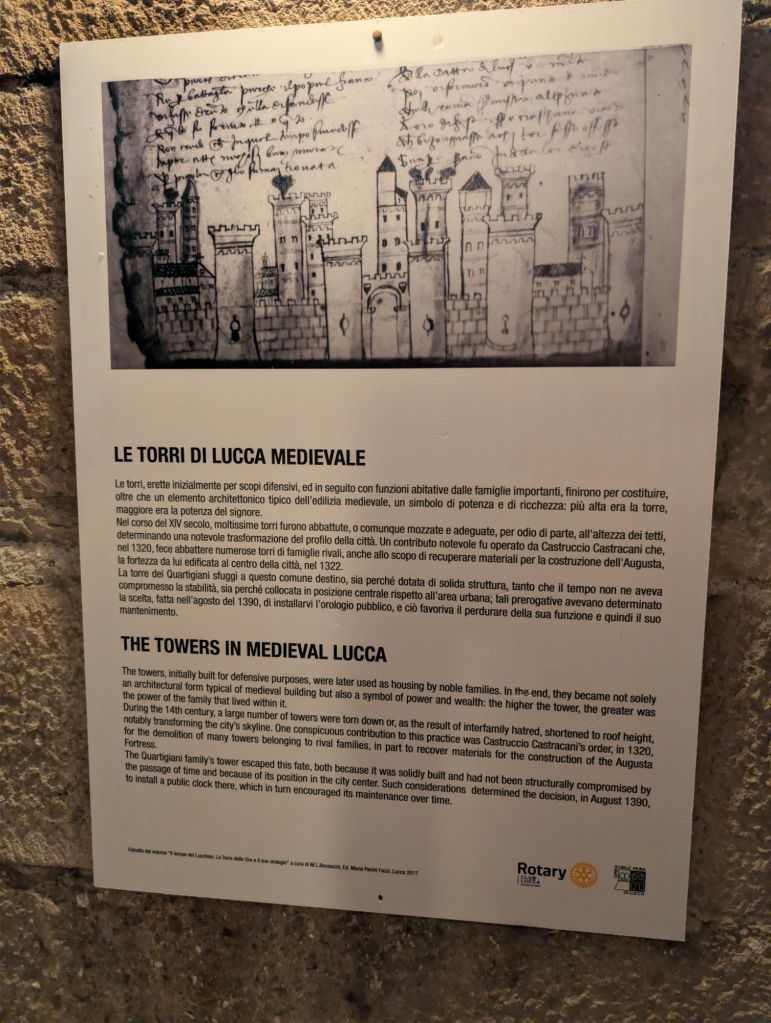
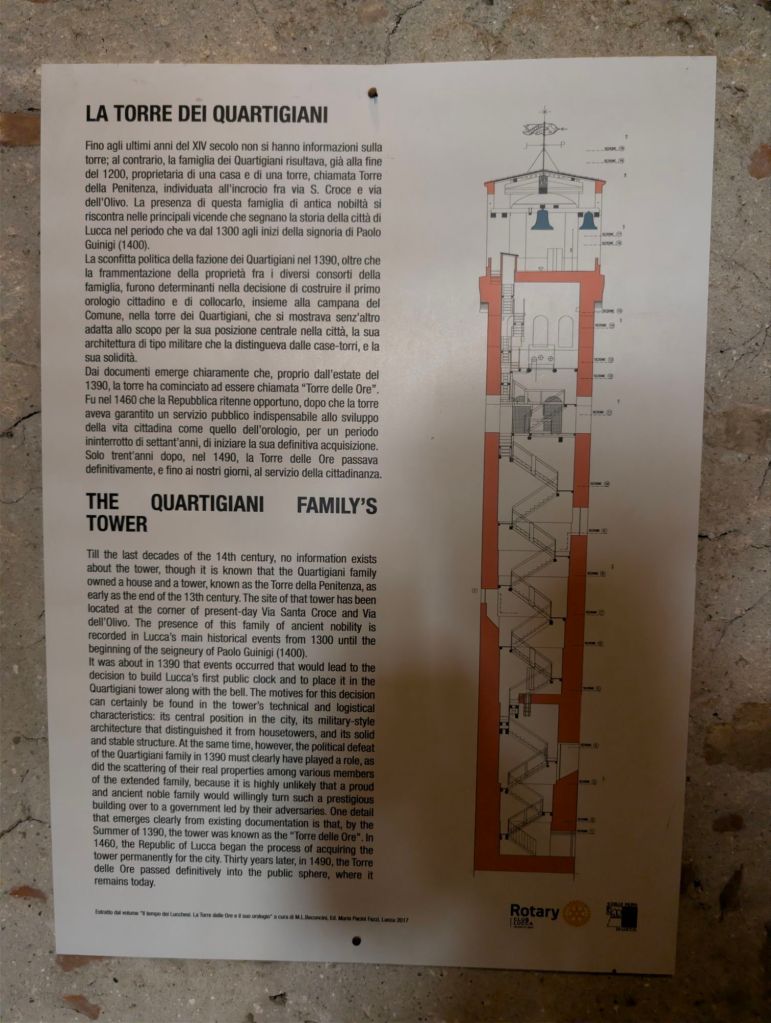
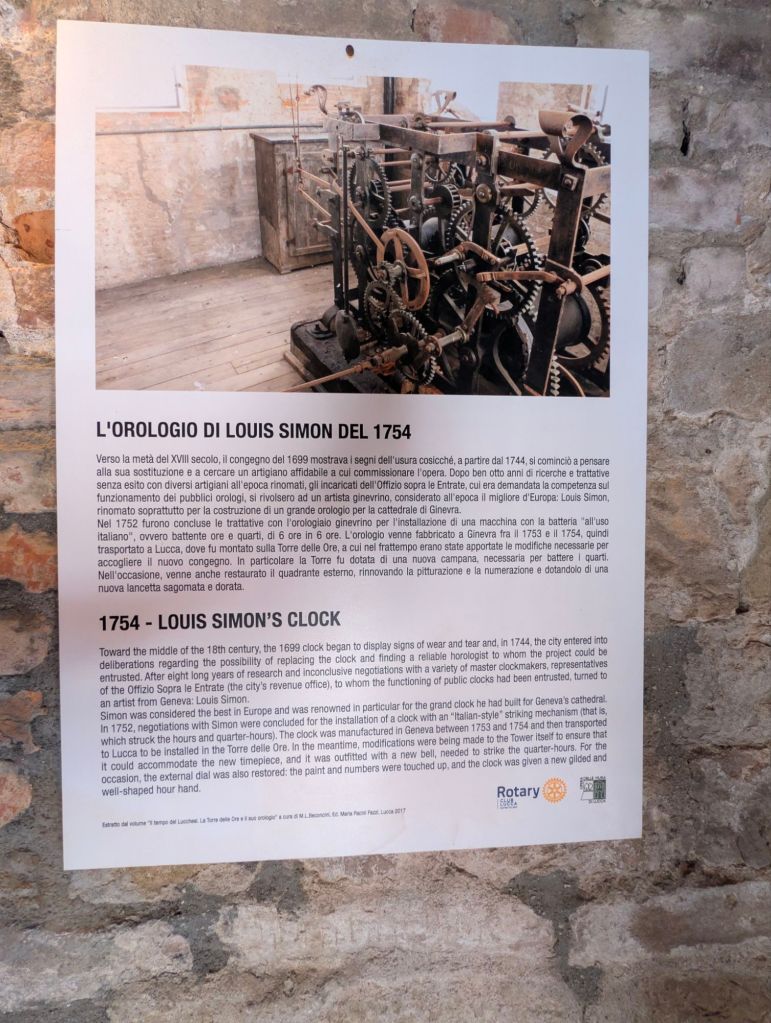
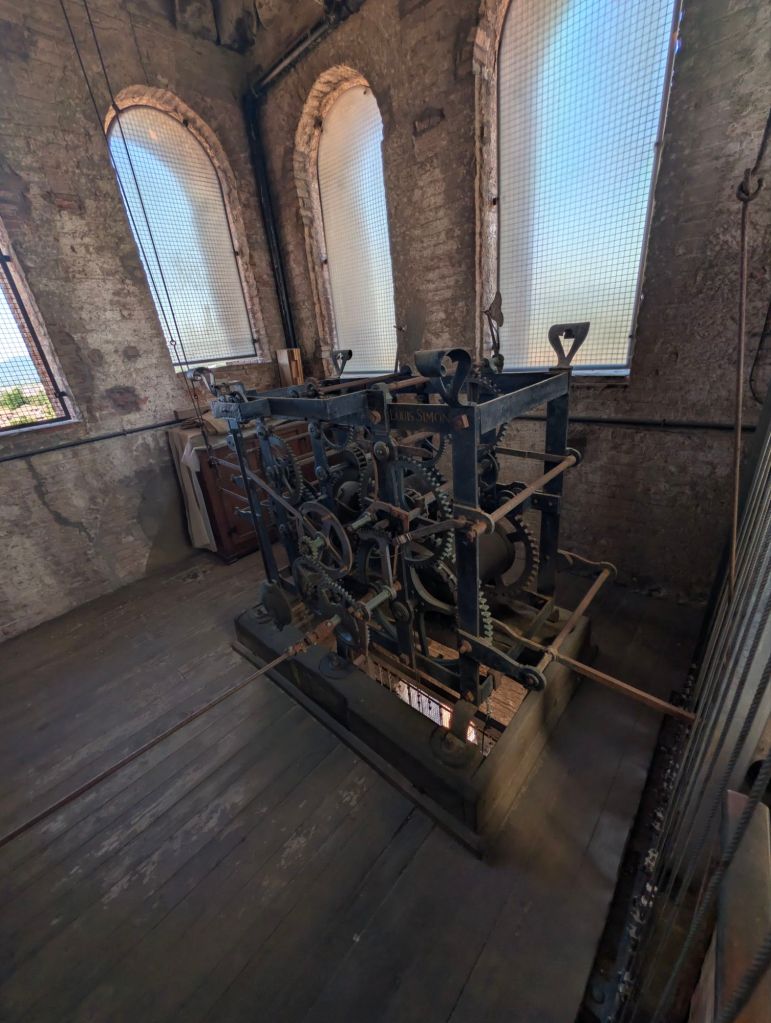
There used to be more than 250 towers in Luccas’s mediaeval skyline, showing the wealth of the city. Today, only two remain. The 50 m high Torre dell’Oro has 207 wooden steps that take you up behind the clock mechanism developed by Swiss engineers in the 18th century .
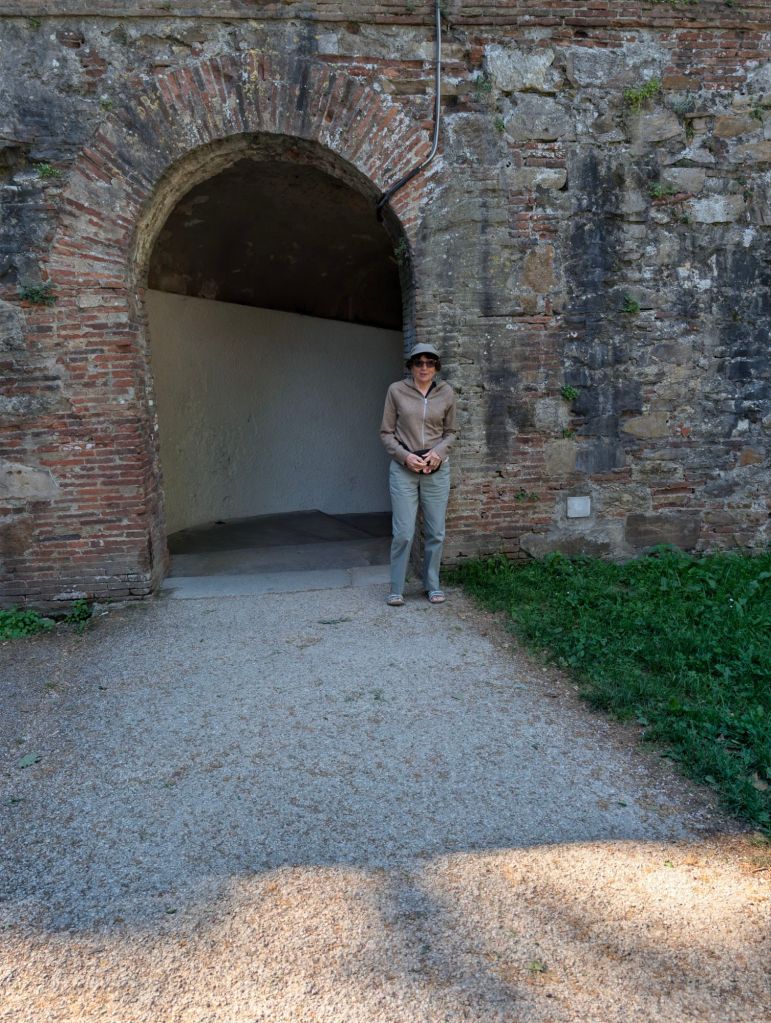
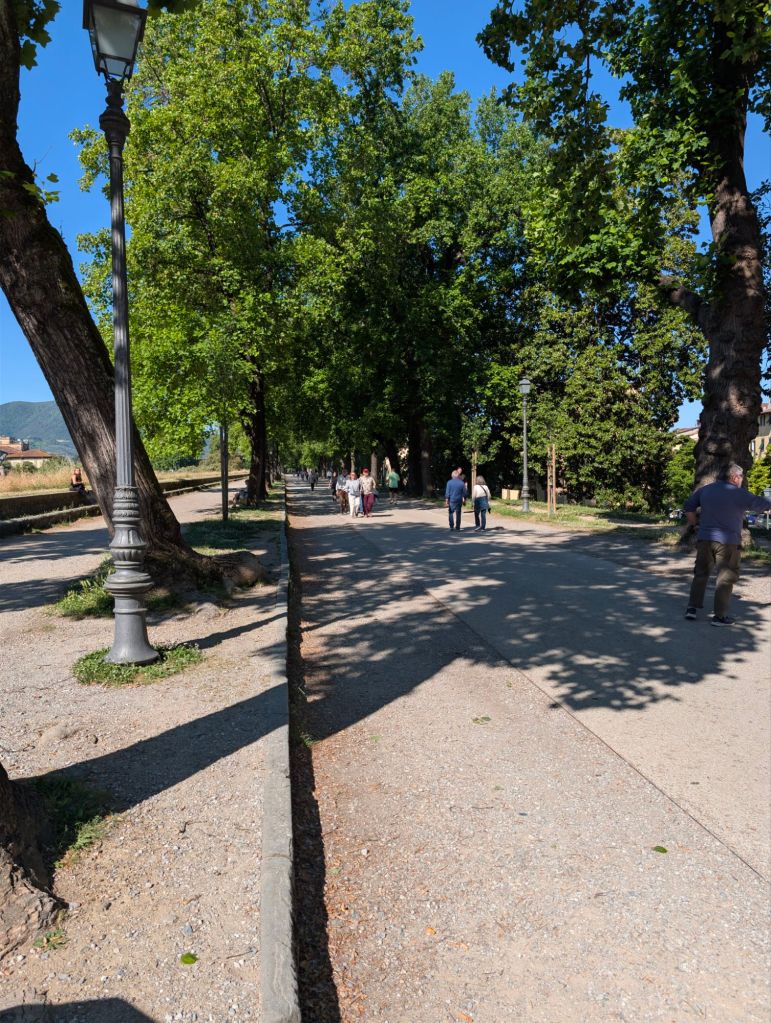
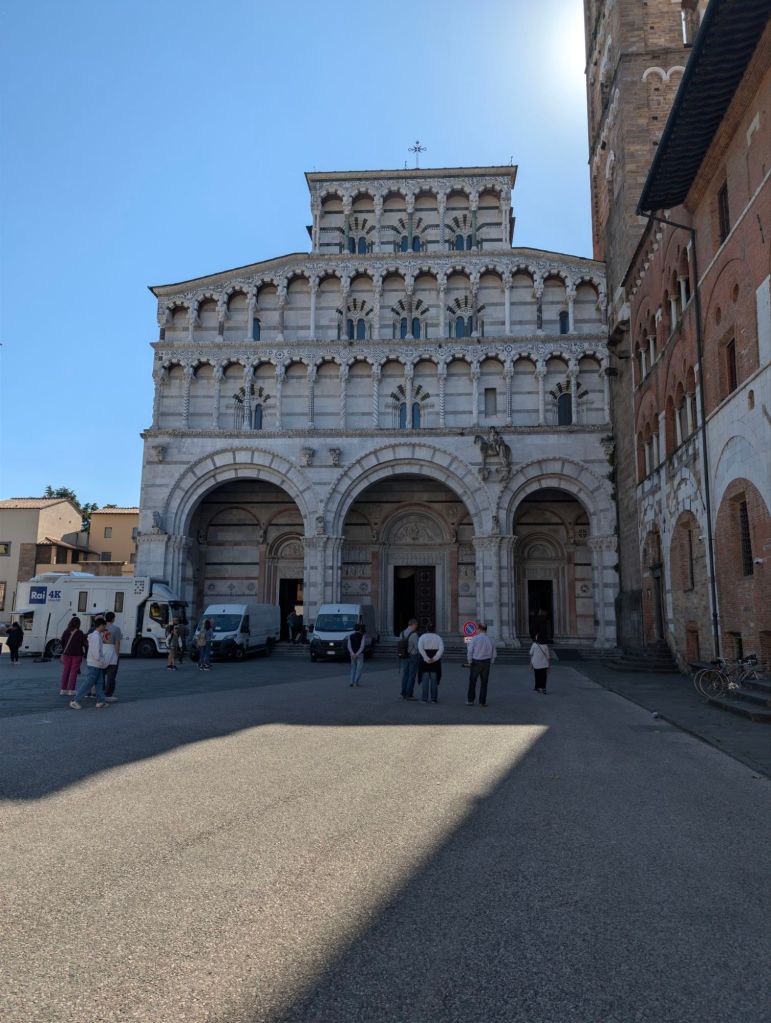
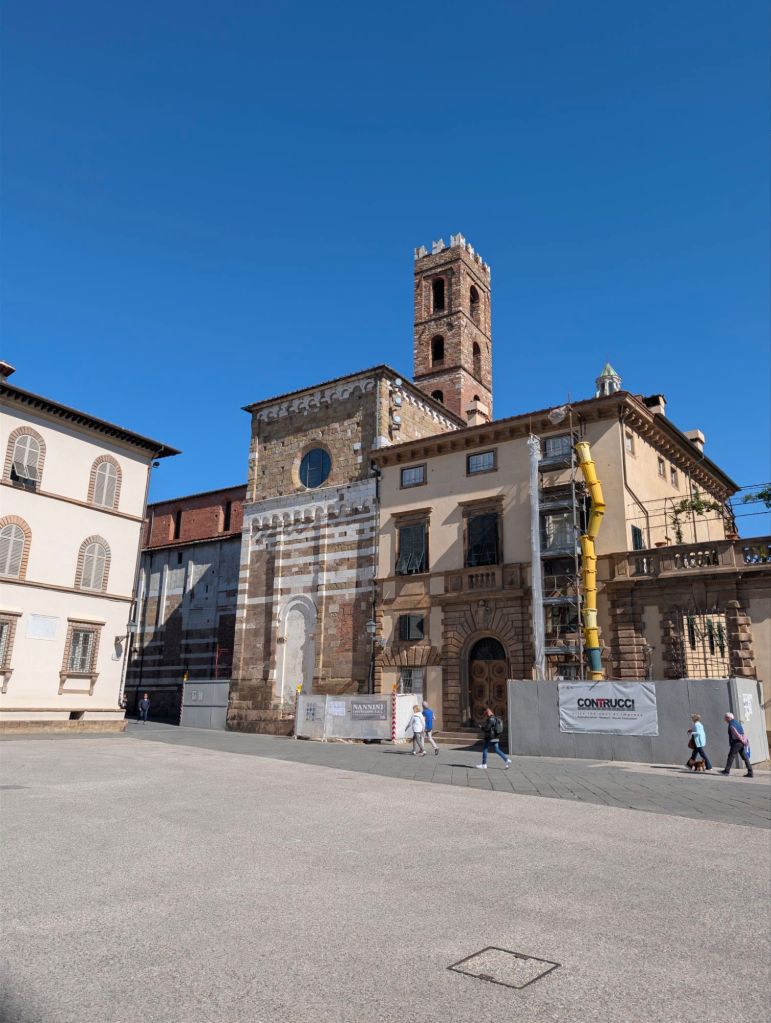
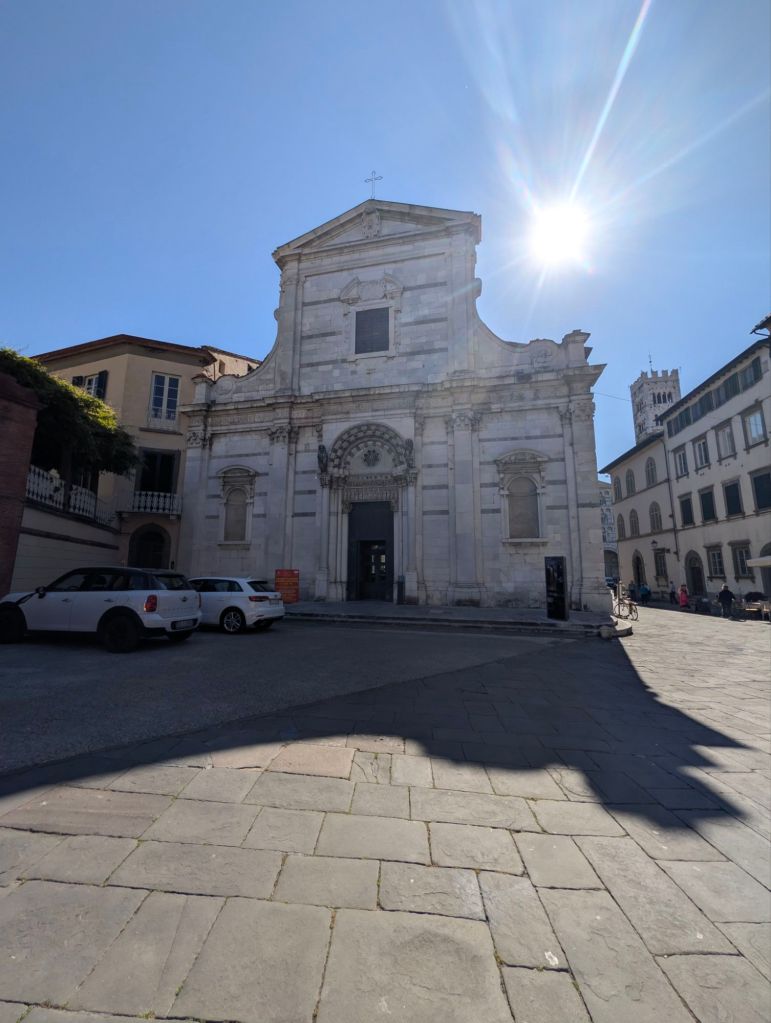
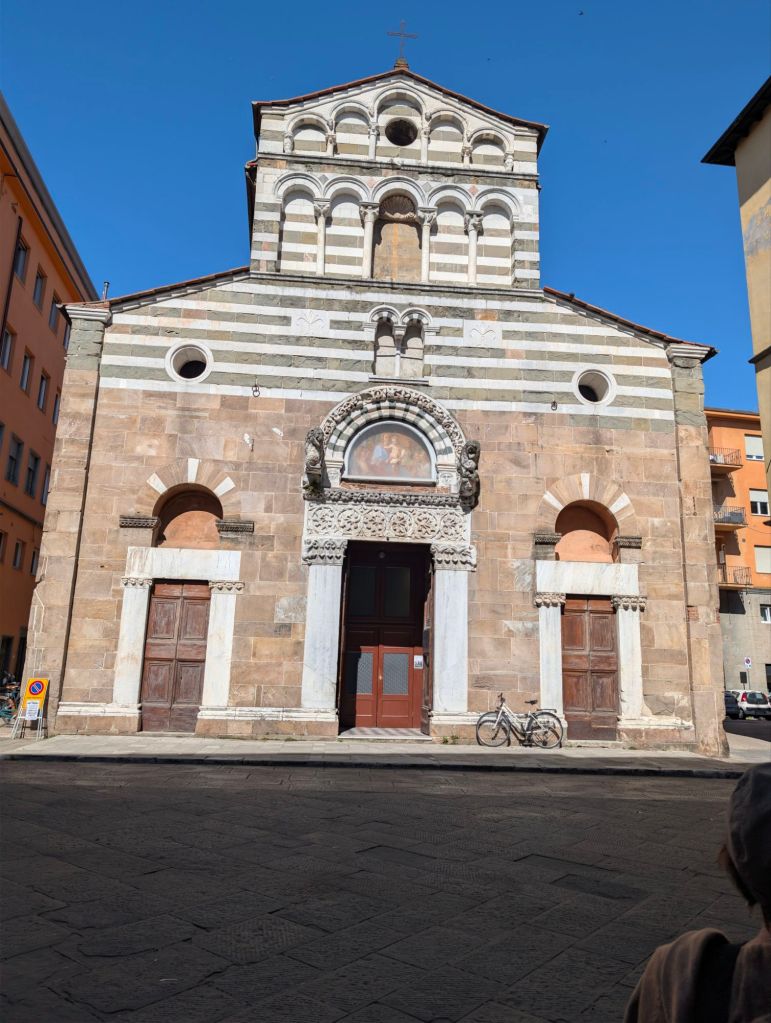
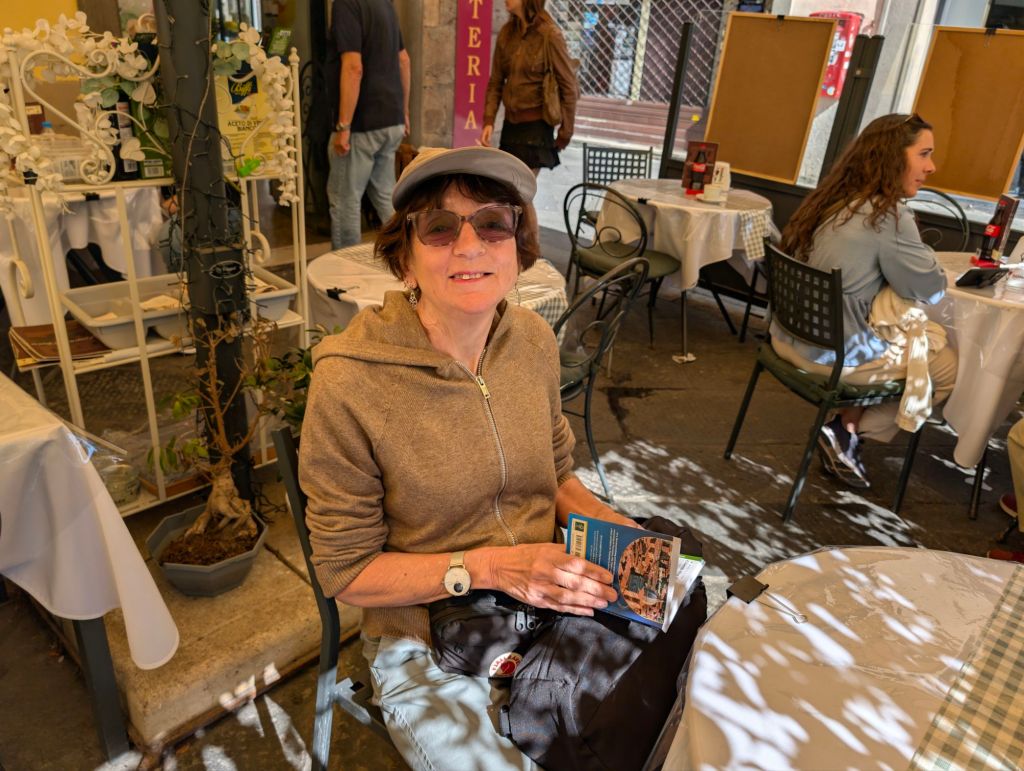
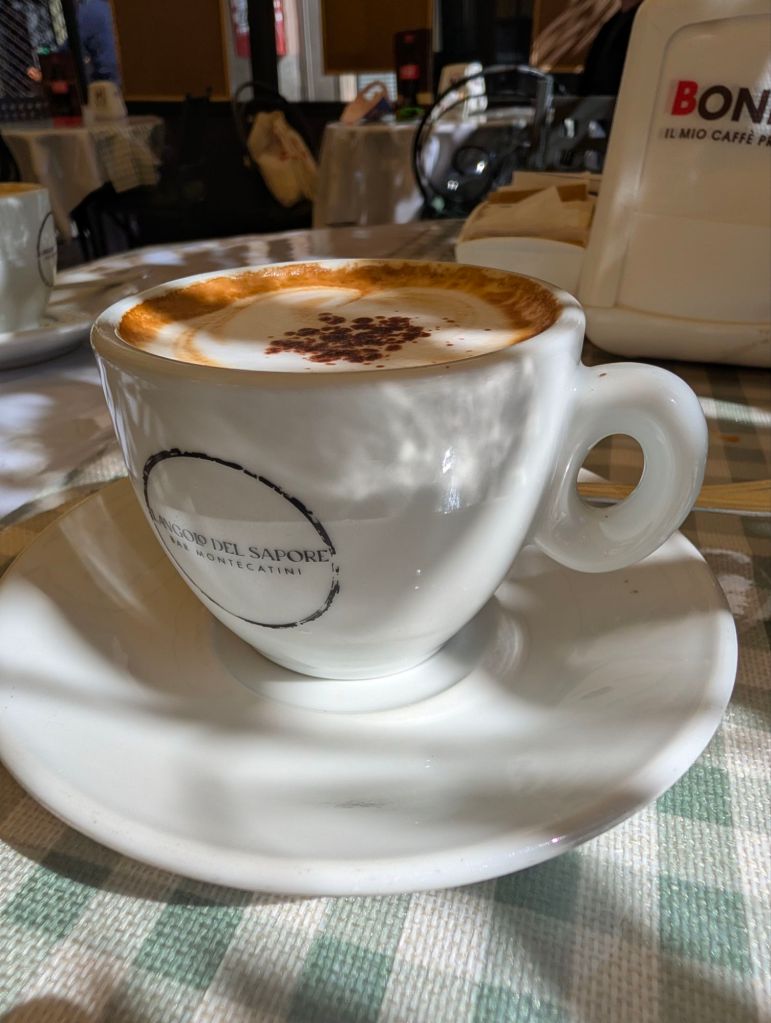
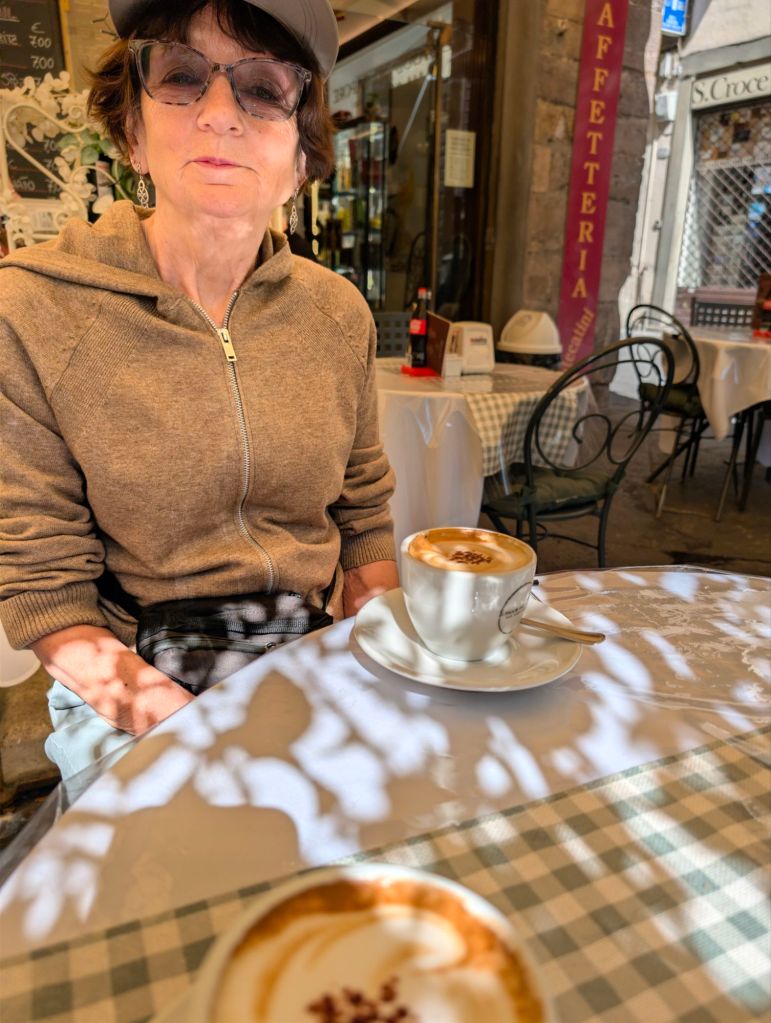
Our aim is to walk up two the remaining towers, one is called Torre della Ore and I’m not sure of the other one but we’ll find it later .
https://maps.app.goo.gl/xbiqSSqtwGX57zas6
In 1391 Labruzio Cellotti was commissioned by the Republic of Lucca to build a clock for the Palazzo Pubblico. In 1471 this clock was installed in one of the city’s surviving towers, called the Torre della Litte (Tower of Dispute), because of the numerous arguments between the rival families for possession of it. In the end in 1490 the Republic bought it from the Deversi family and today it soars above the city and is called the Torre dell’Ore or the Tower of Hours. The clock stopped for several years at the end of the last century but the people of Lucca wanted it to be stored. It is now in full working order and visitors who stop for a while within the walls will hear its solemn evocative chimes.
Whether you come from Via Filungo, the best known street in Lucca, or a little side street called Ciasso Barletti, you will be struck by its size and gracefulness and your imagination will be stirred. However I recommend you approach it from Ciasso Barletti because this short narrow street, which is what Ciasso means, envelopes you in its mediaeval atmosphere and prepares you not only for the sight of the Torre della Ore but also for walking the entire length of Via Filungo, flanked by ancient palazzos that are still proud and magnificent.
As you walk along Ciasso Barletti don’t forget to look up at the roofs that almost touch each other. They seem to enjoy hiding the sky; however they show just that little bit that manages to filter down through the shadows, almost creating a magical backdrop to the streets with the old T-shaped shops that still open onto it as examples of the old pride in doing business, a pride that survives to this day.
Ciasso Barletti has its own undiminished dignity preserved intact over the millennia since the time of 56 BC when Caesar, Pompey, and Crassus held a famous meeting in which 200 senators and people of considerable military and political importance took part. You will remember this little street just as you will remember the Torre della Ore that appears in its majesty as soon as you set foot in Via Filungo. It stands almost in front of you, a little to the left, its base made with solid, close-packed, centuries-old stones.
This was one of the few towers left and still to be seen after Augustione della Fagiola of Pisa besieged Lucca on the 14th of June 1314, then entered it and put it to the sword and fire for three days, destroying churches and palazzos and knocking down the towers so that the people could no longer look out over the plain.
When you look at it don’t forget that a legend has grown up here as well. People say that up there, where the bells are, it’s sometimes Labruzio Celletti, the clockmaker who strikes the hours. The tower is too high to see him especially as they say. He appears at night when the city is plunged in darkness and absolute silence. People who hear the chimes in their sleep can tell they’re not the usual times and that it’s as if a skilled and loving hand was at work.
Numerous traps have been laid at night with lights switched on suddenly from roofs and roof terraces and shining white daylight on the belfry. Some people say they’ve seen the shadows of a man shielding his eyes from the blinding light, trying to hide and then running away. Others say that all they heard was a loud noise, almost like the shrill whistle of the wind.
Whether the legend is true or not, people who live in Lucca will tell you that on certain nights those particular chimes make them sleep more soundly and give them the gentle forgetfulness that helps them to face day-to-day life without the frenetic stressful rhythms that make the inhabitants of so many other cities in the world unhappy
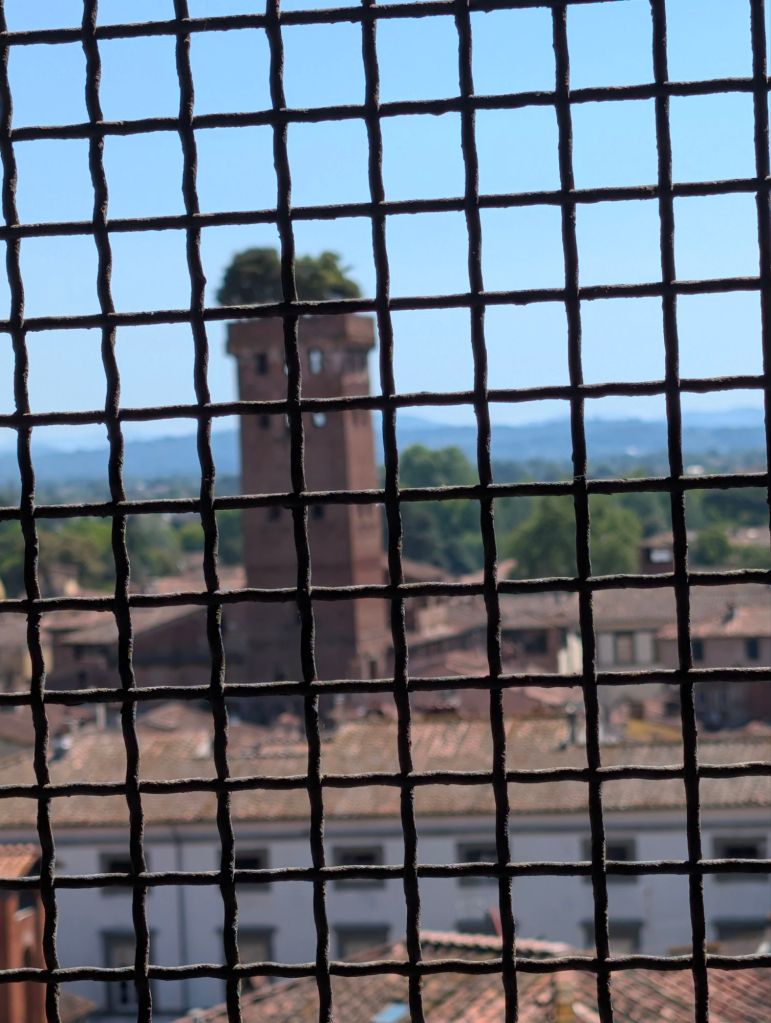
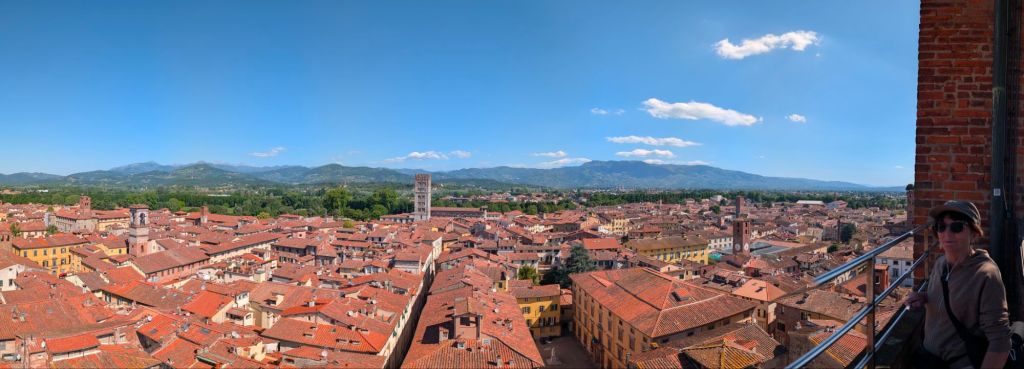
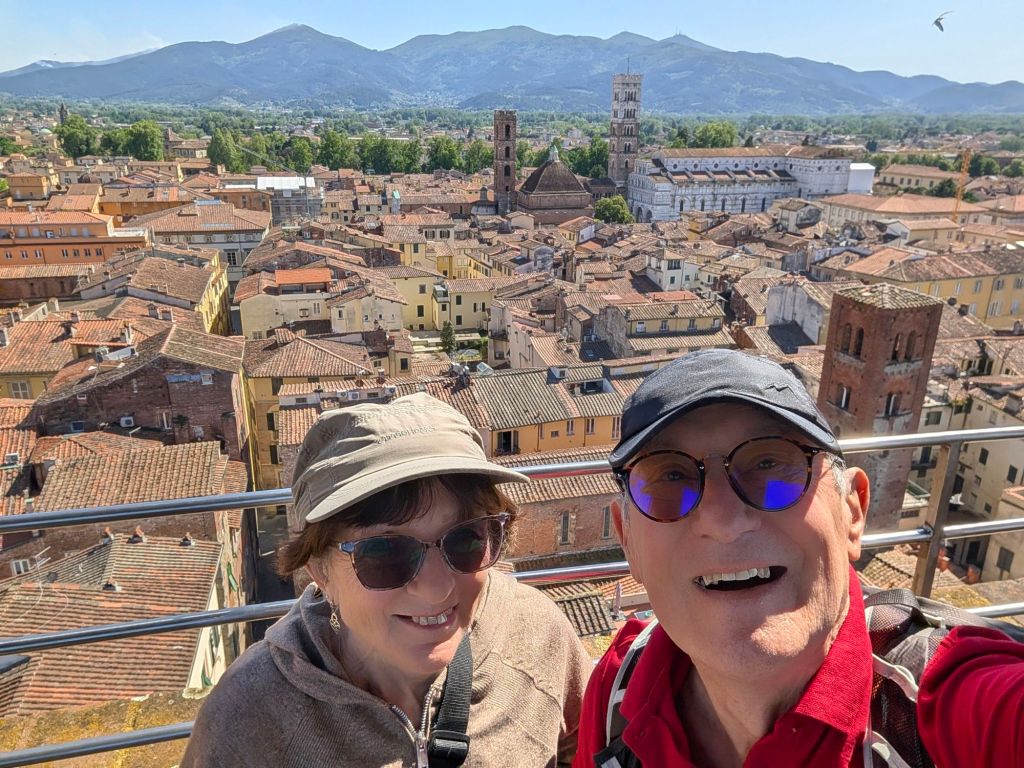
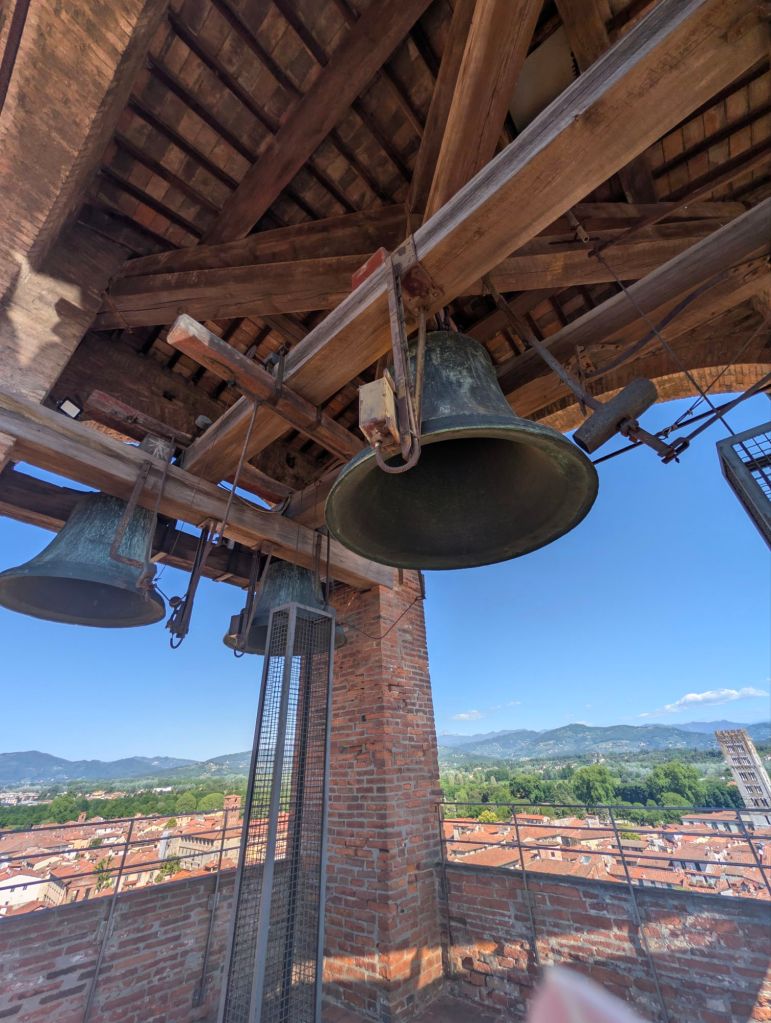
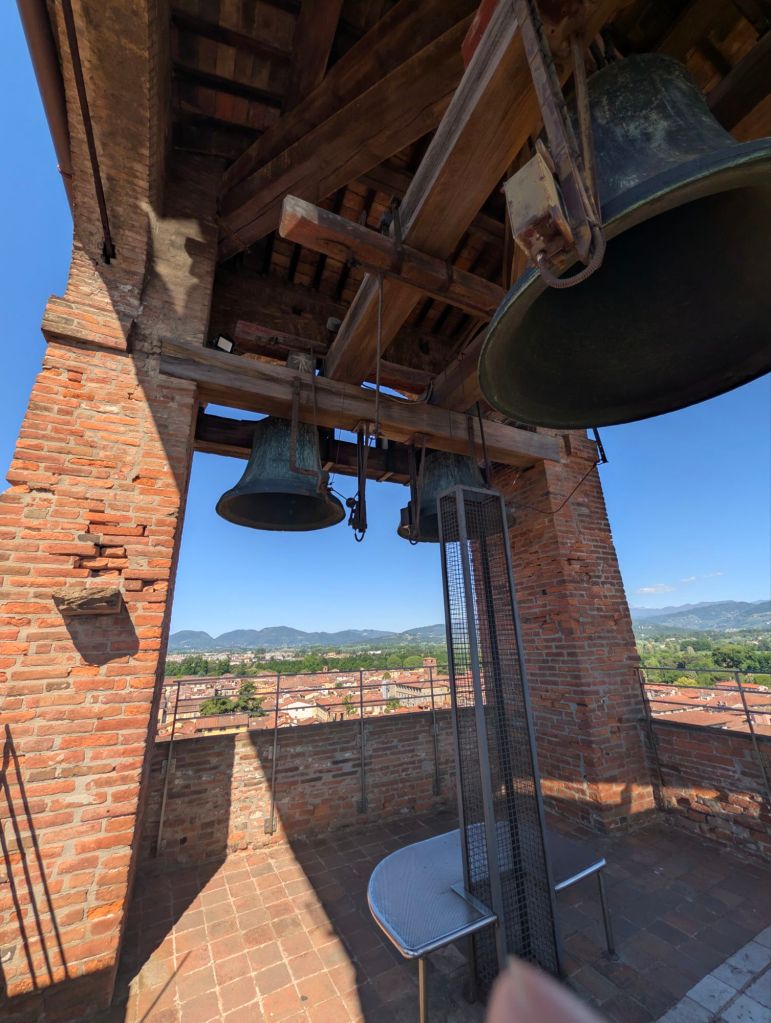
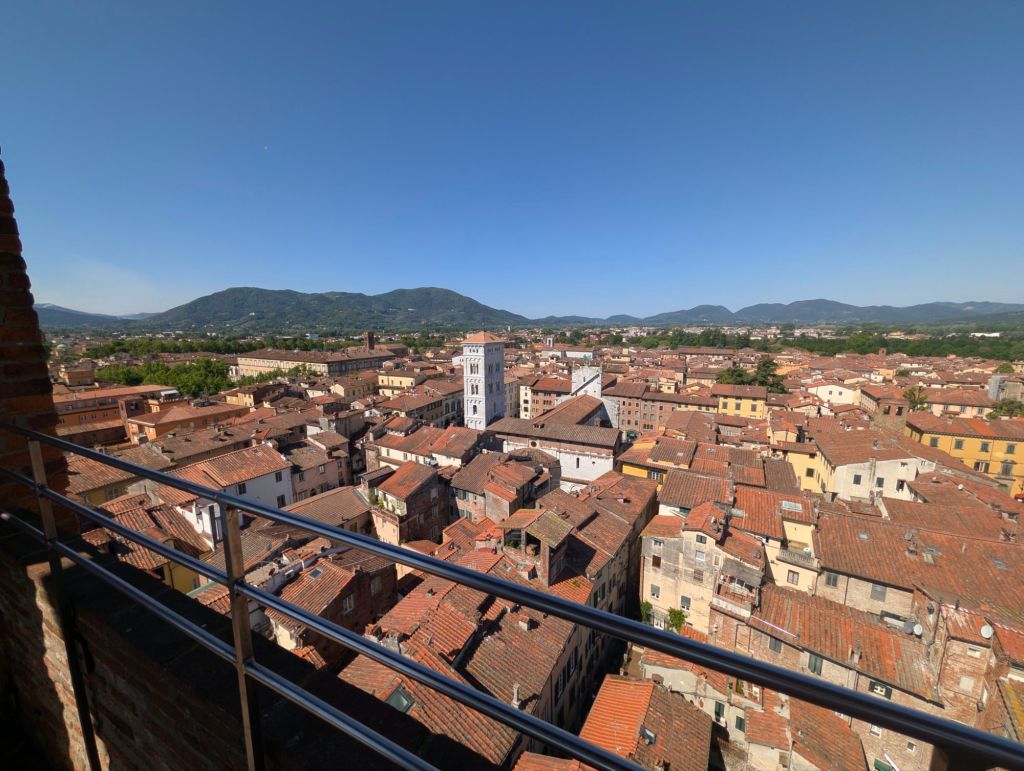
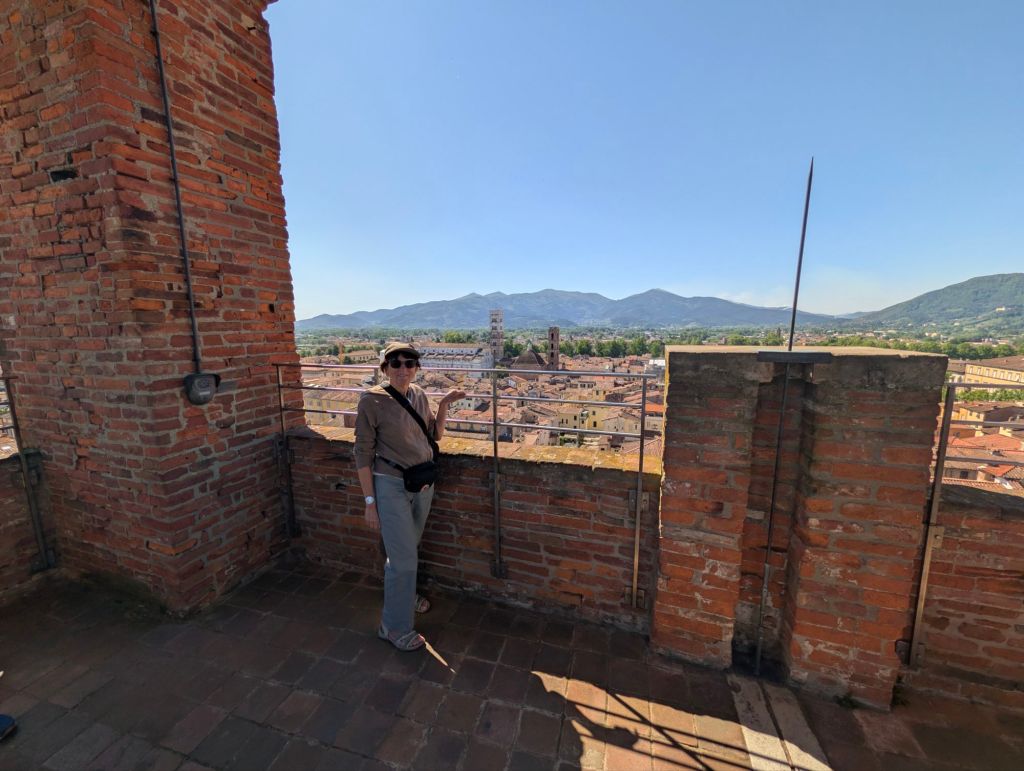
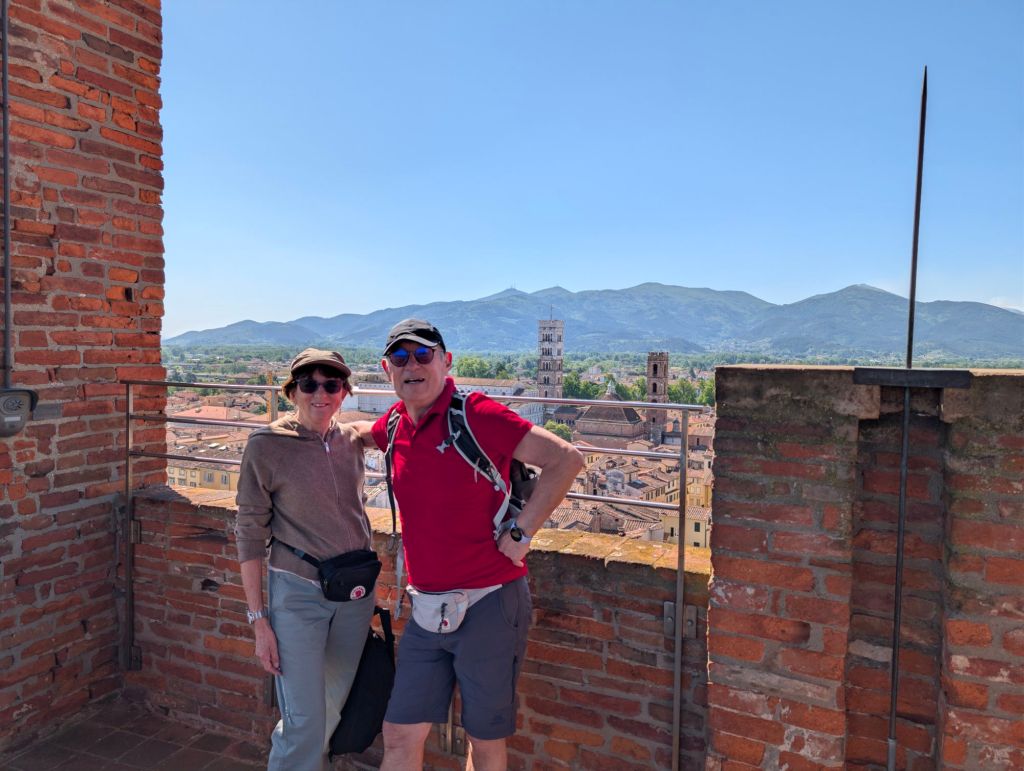
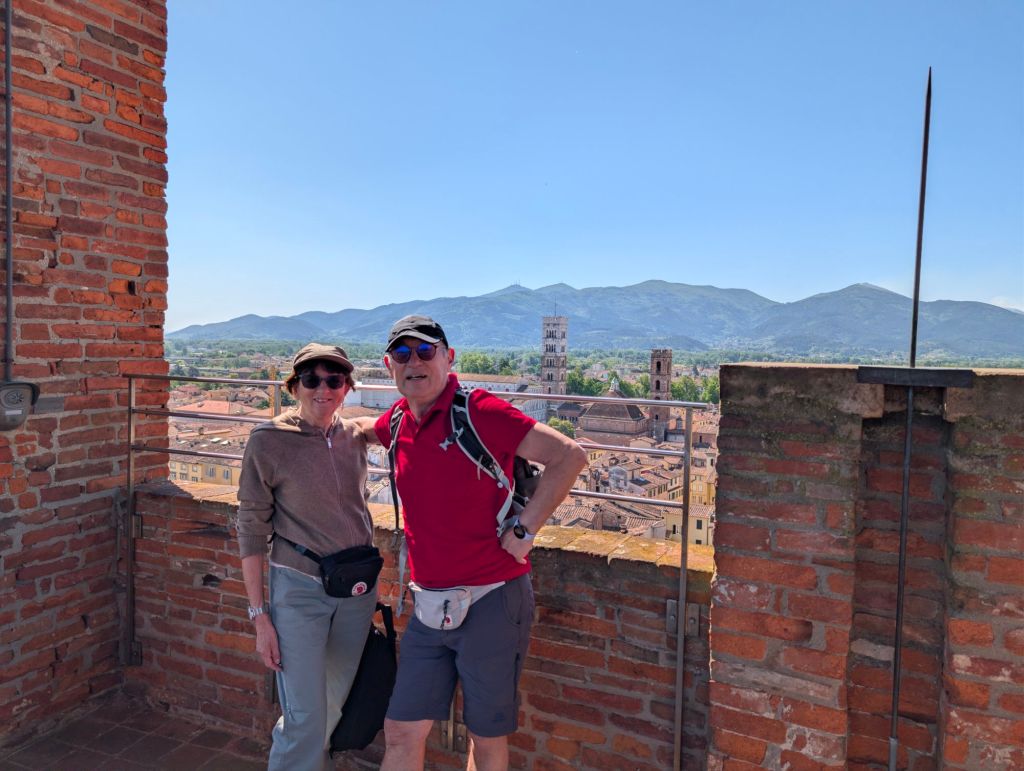
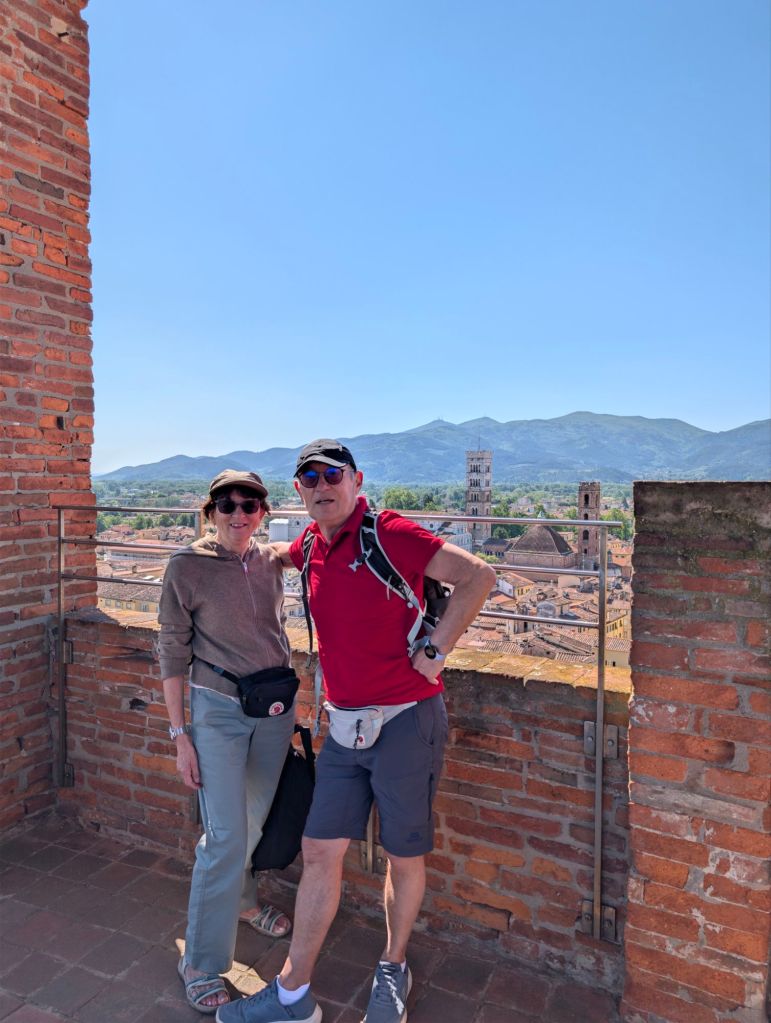
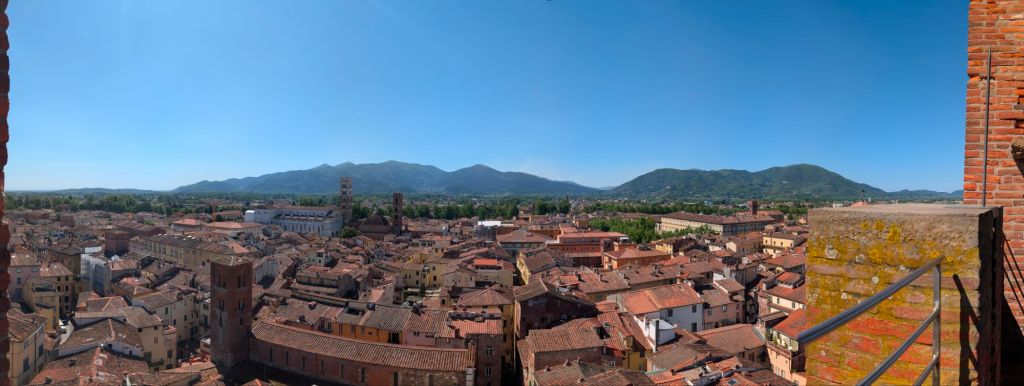
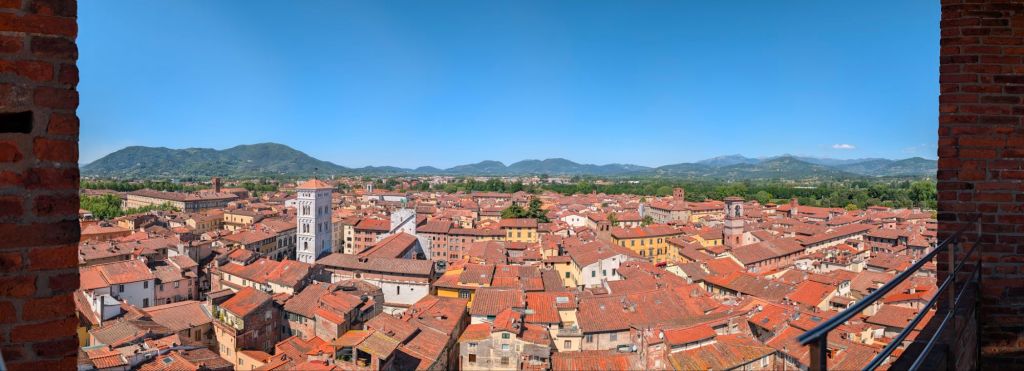
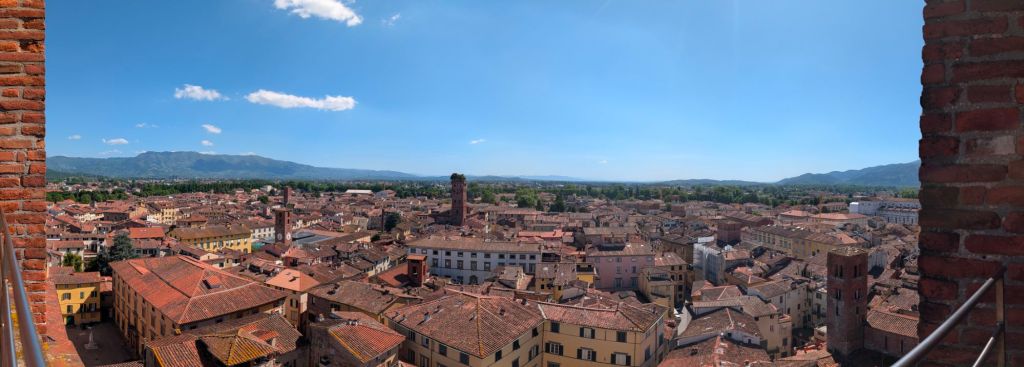
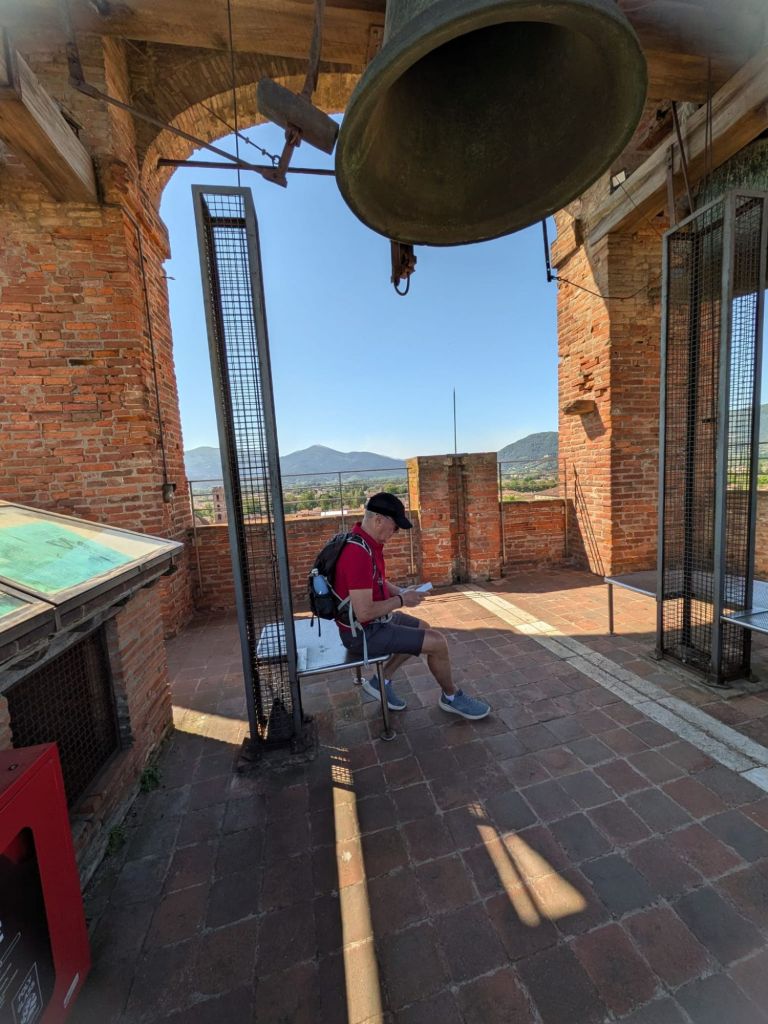
I’ve been told the second tower is called Torre Guinigi.
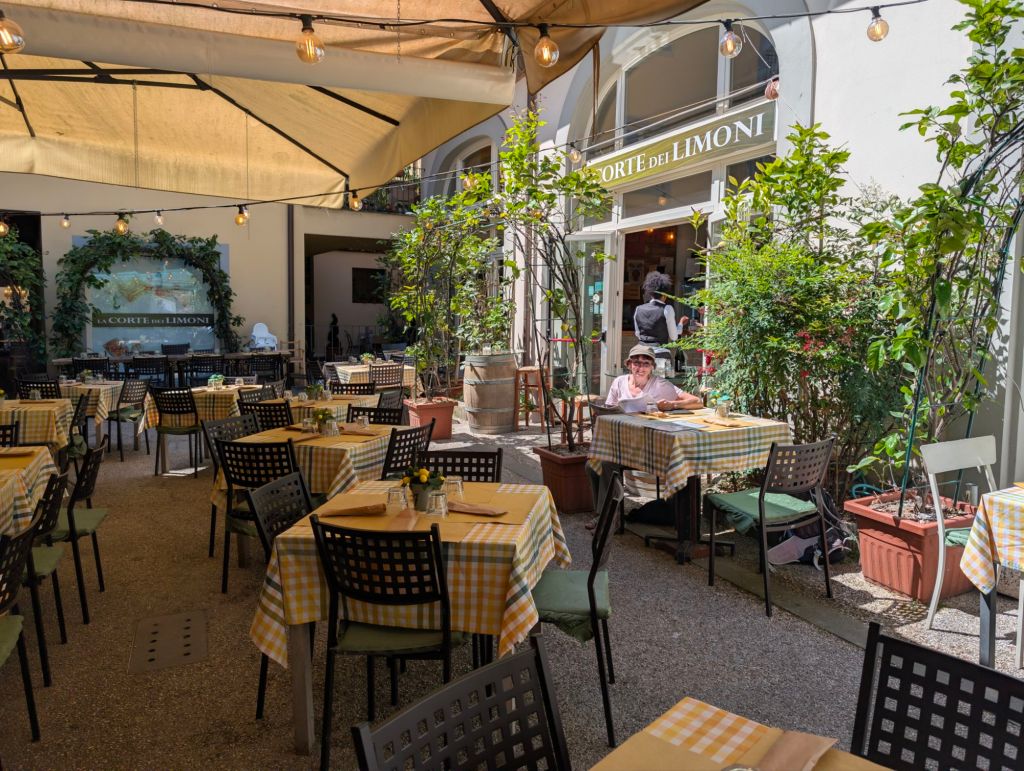
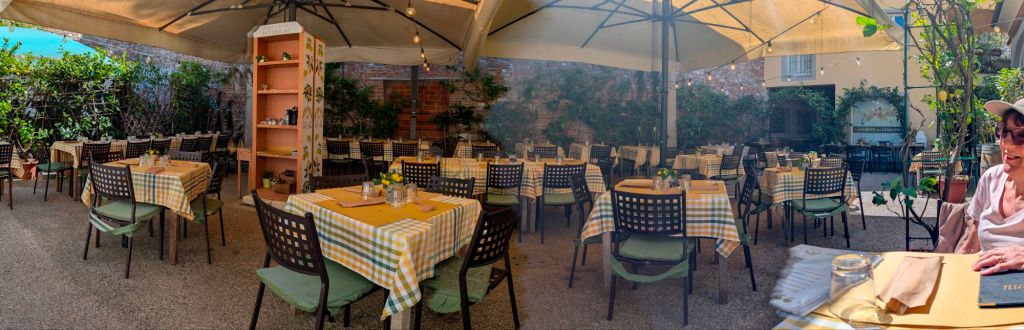
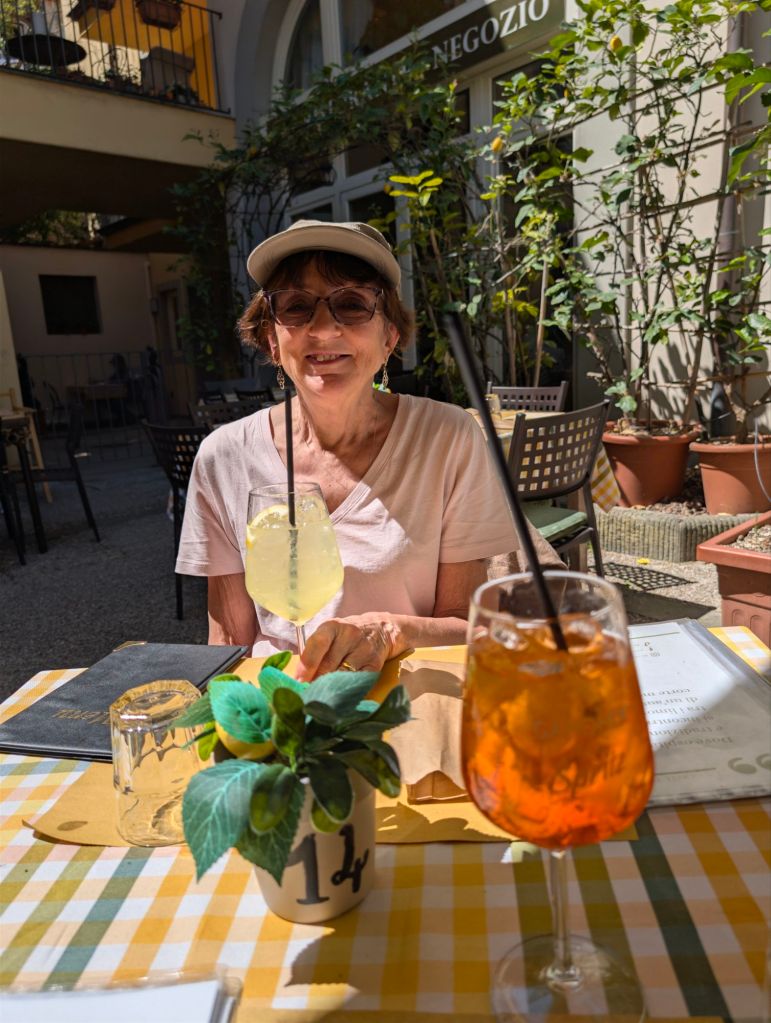
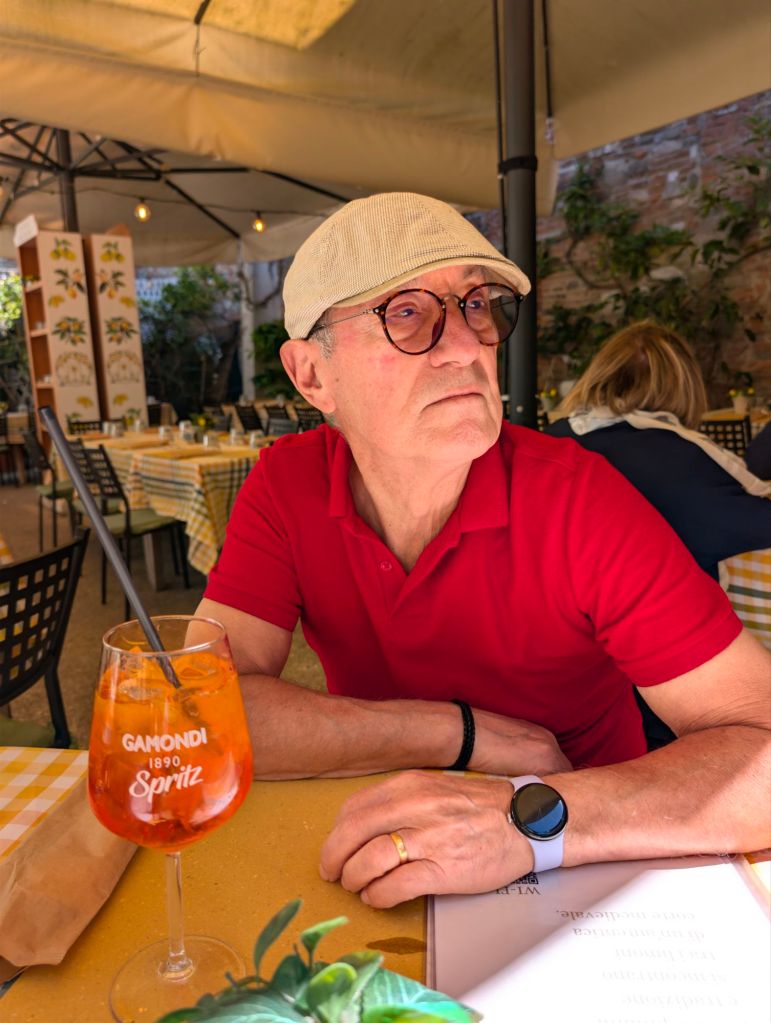
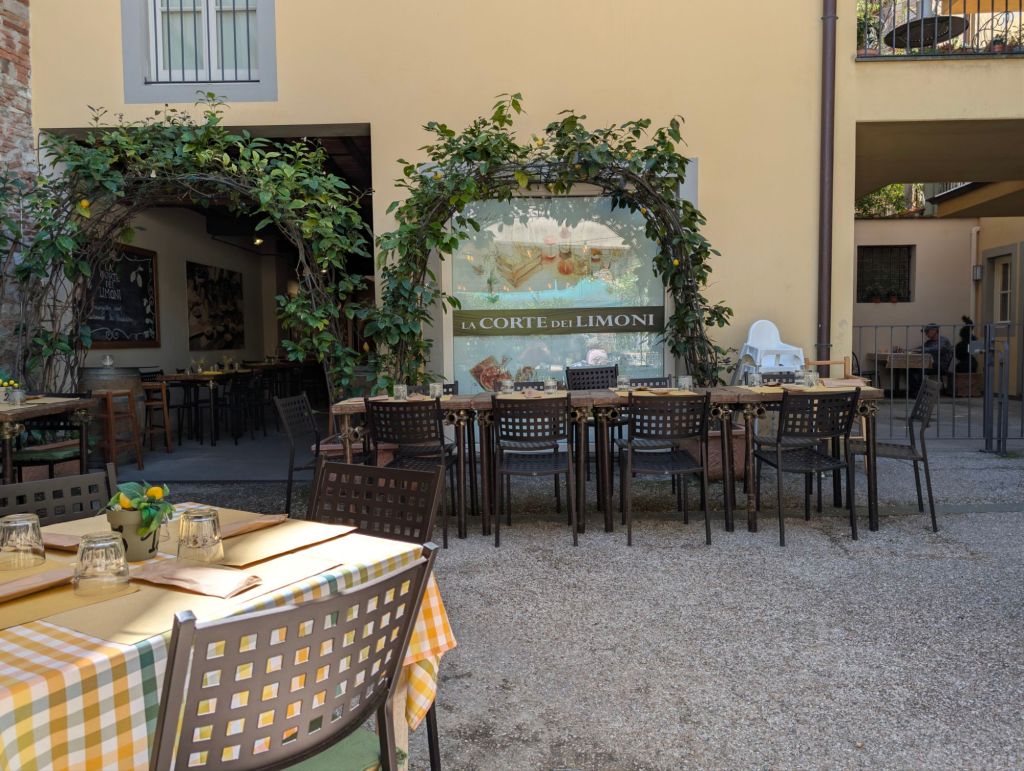
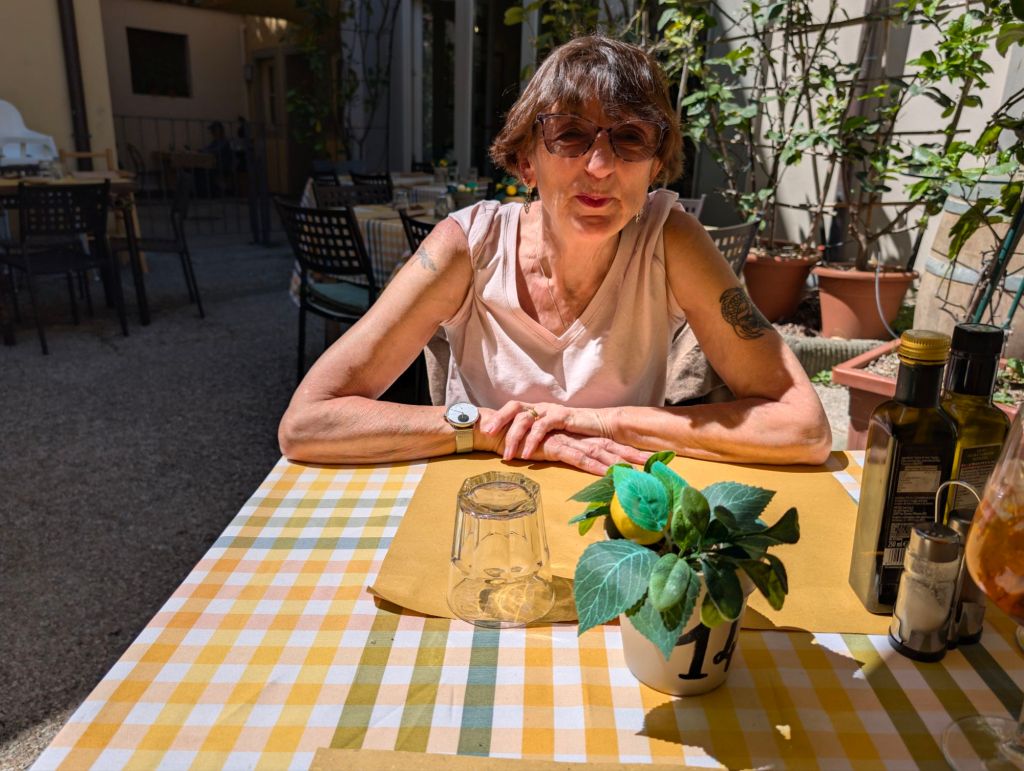
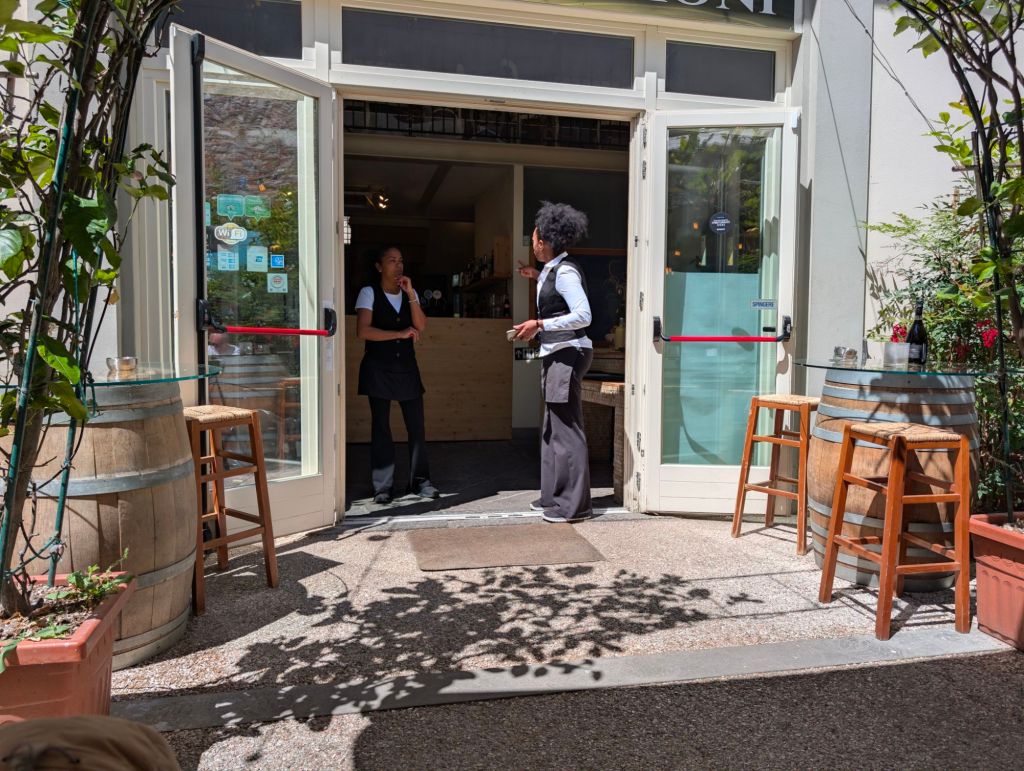
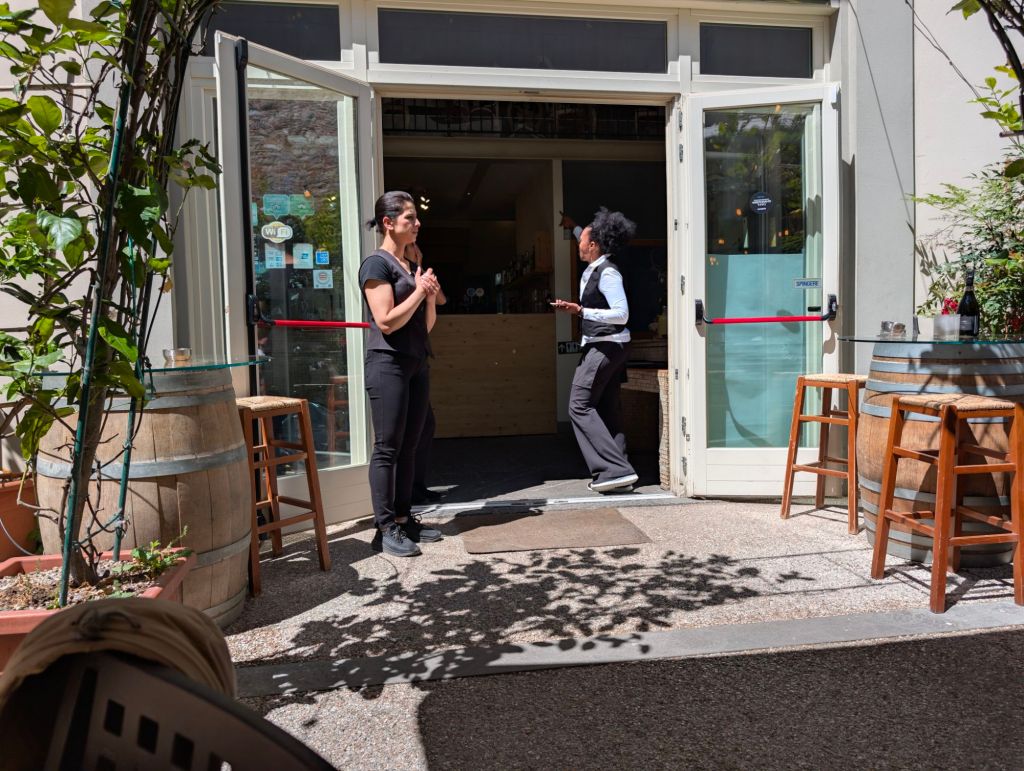
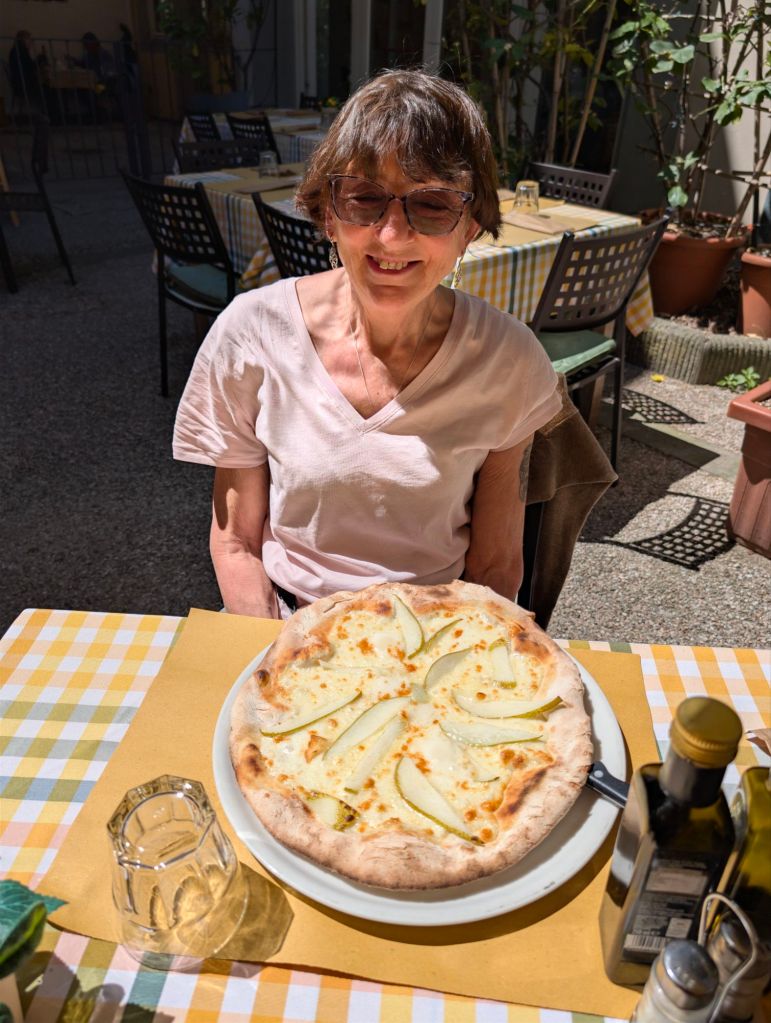
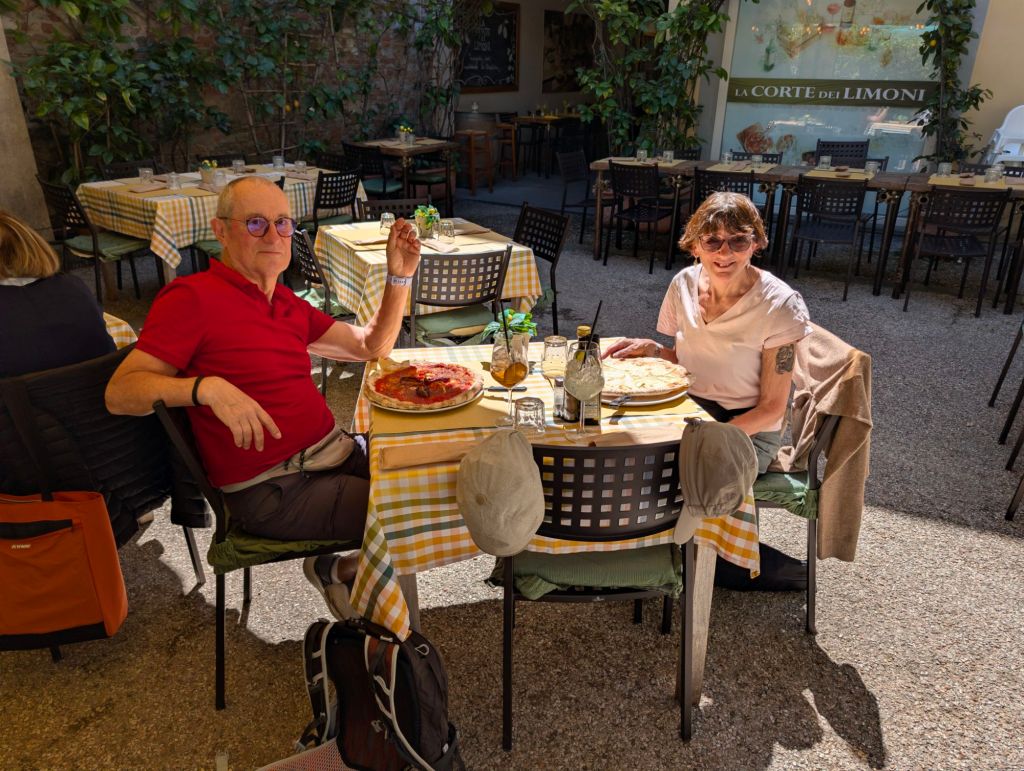
We found a place to eat down an alleyway into a beautiful courtyard with lemon trees and a restaurant called La Corte dei Limoni. It’s a beautiful setting and we’re drinking Limoncello Spritz and Aperol Spritz and we’re about to order pizza . Eventually after much discussion I ordered pizza pelegrino, and Valerie ordered pizza papo, which is a bit weird with pear and other stuff, but I’m sure it’ll be very good when it arrives.
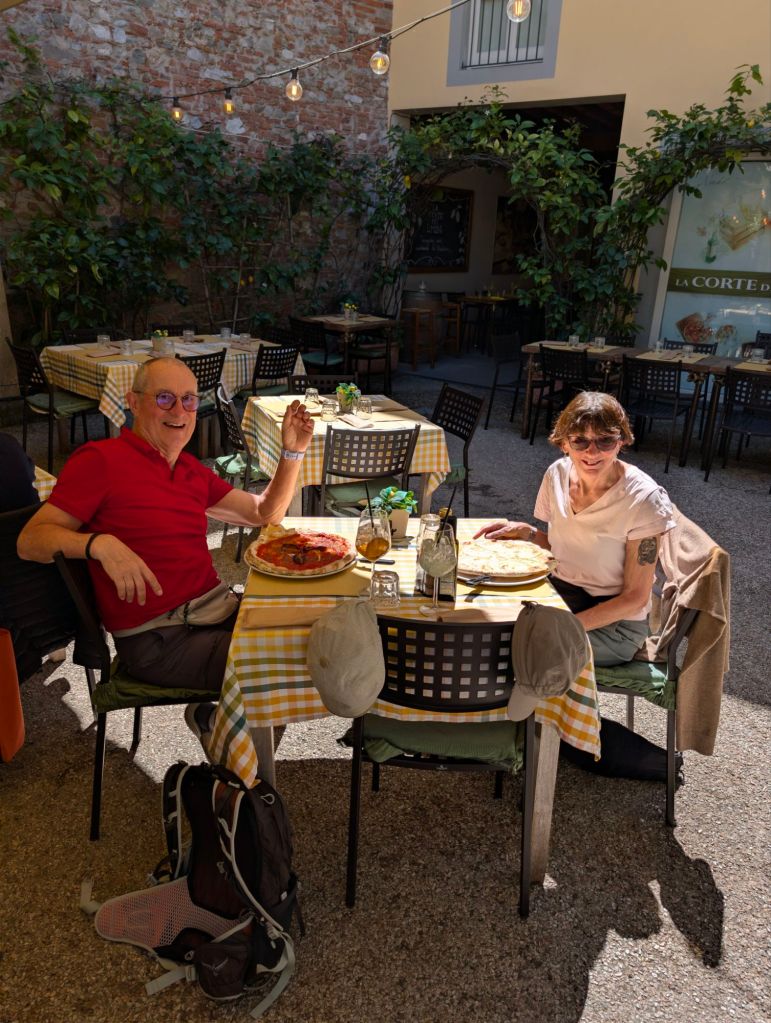
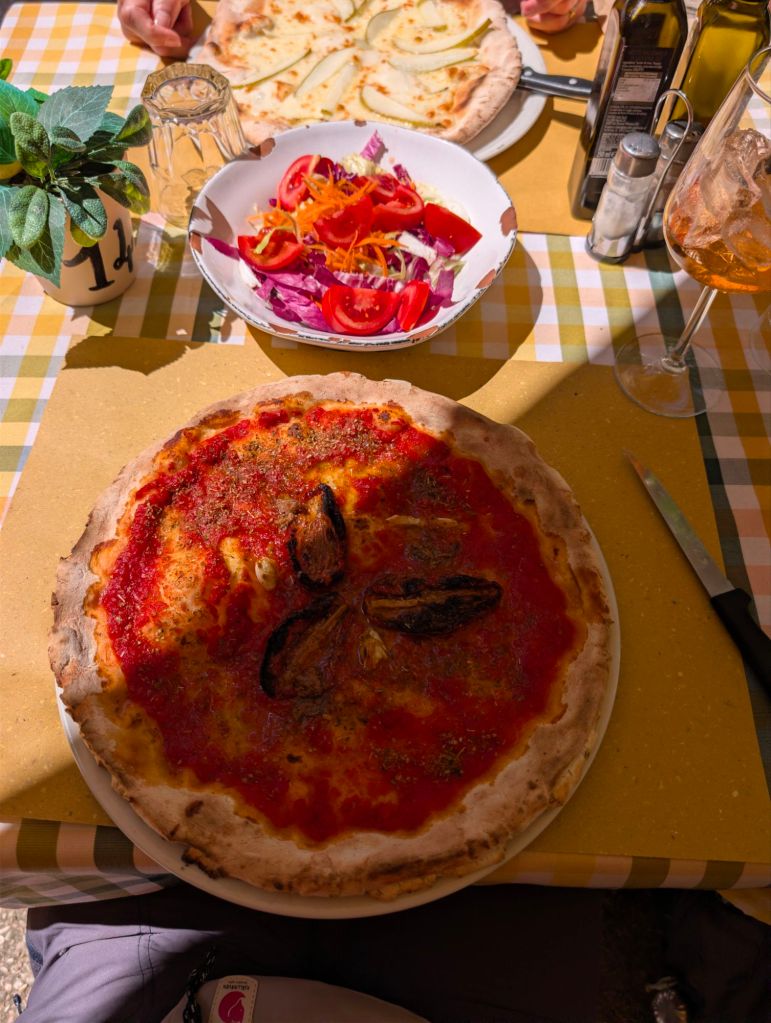
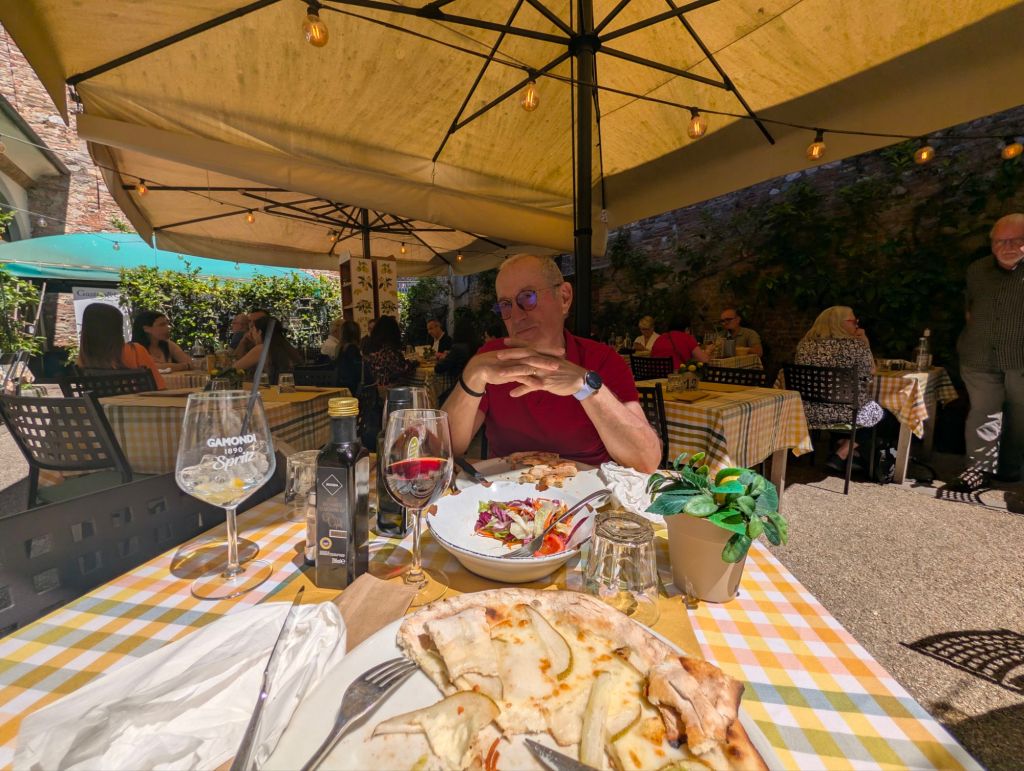
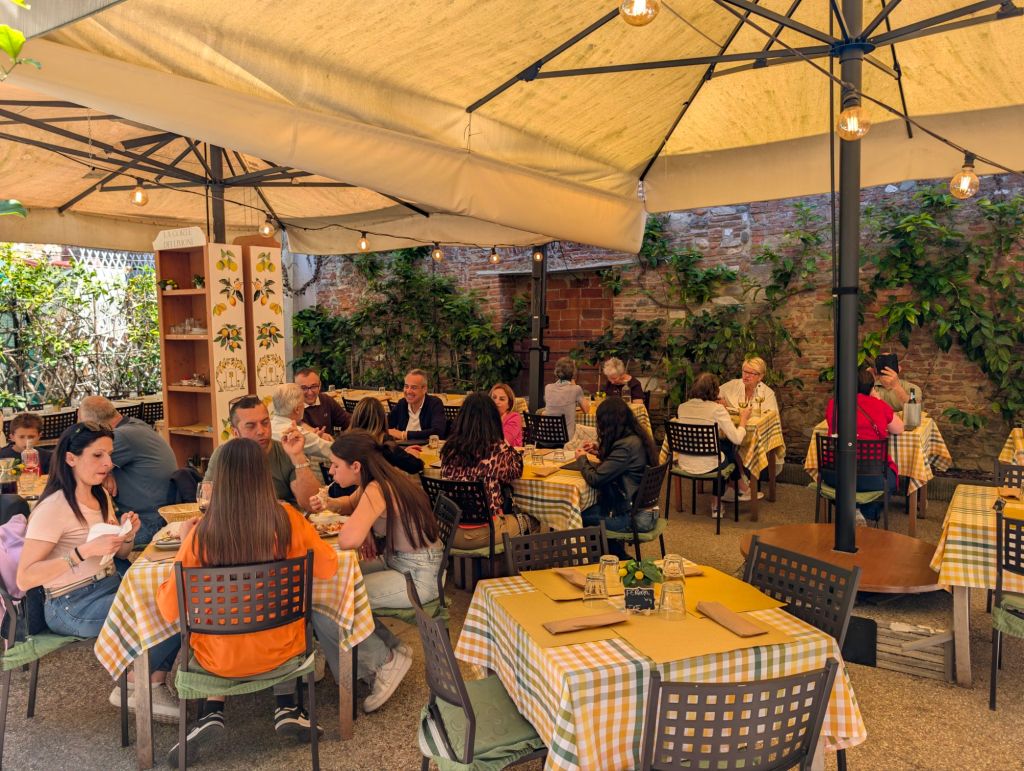
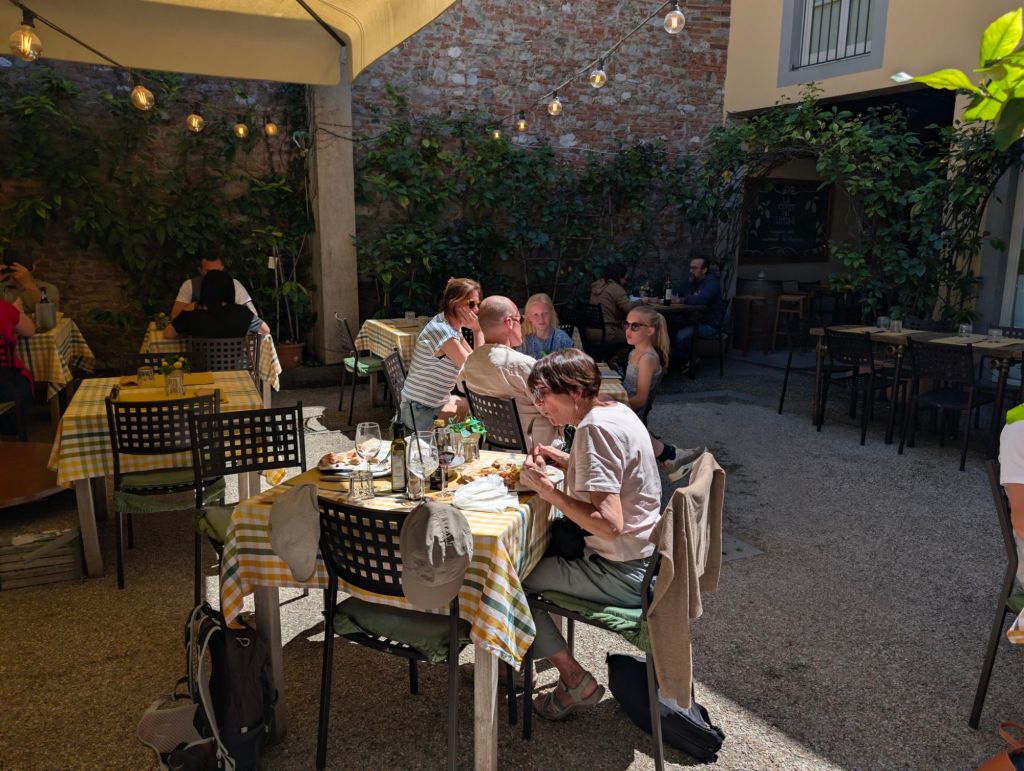
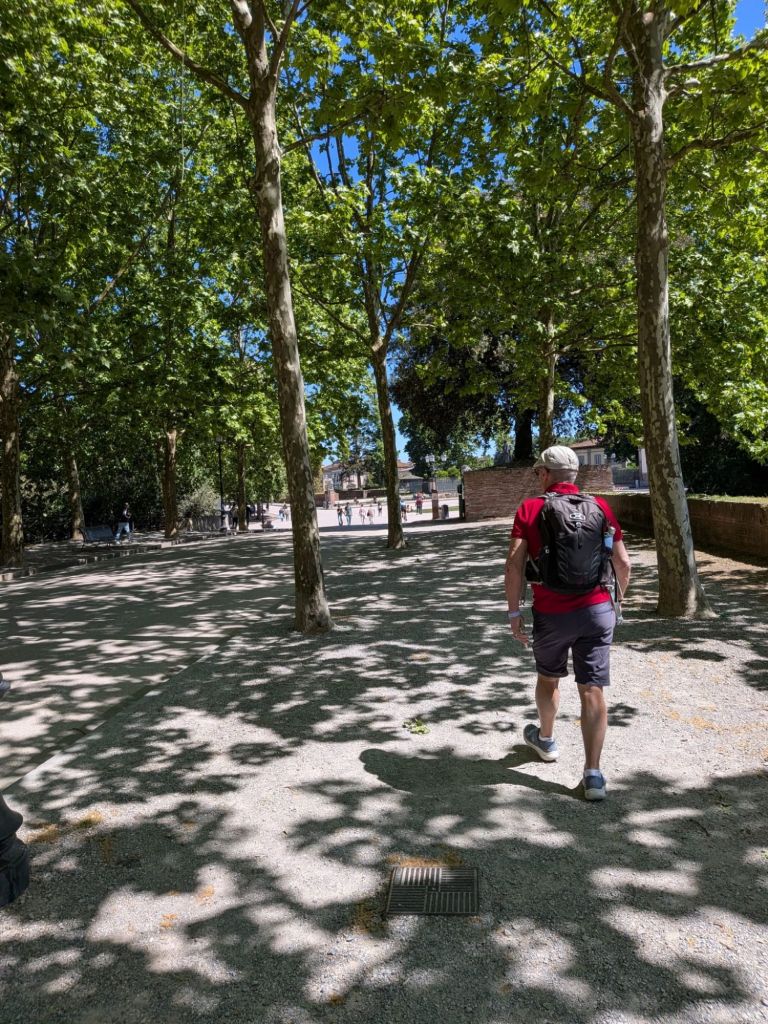
Eventually we had to leave. I was getting too hot and we had organised affogato but it never came so we settled our bill and wandered up to the city wall to sit in the shade and talk to a crow who was on the wall, crowing away
This is the place Valerie has decided we must come back to. Spend a few days here. Chill. Walk the city wall. Enjoy the food. The atmosphere is gentle and relaxing
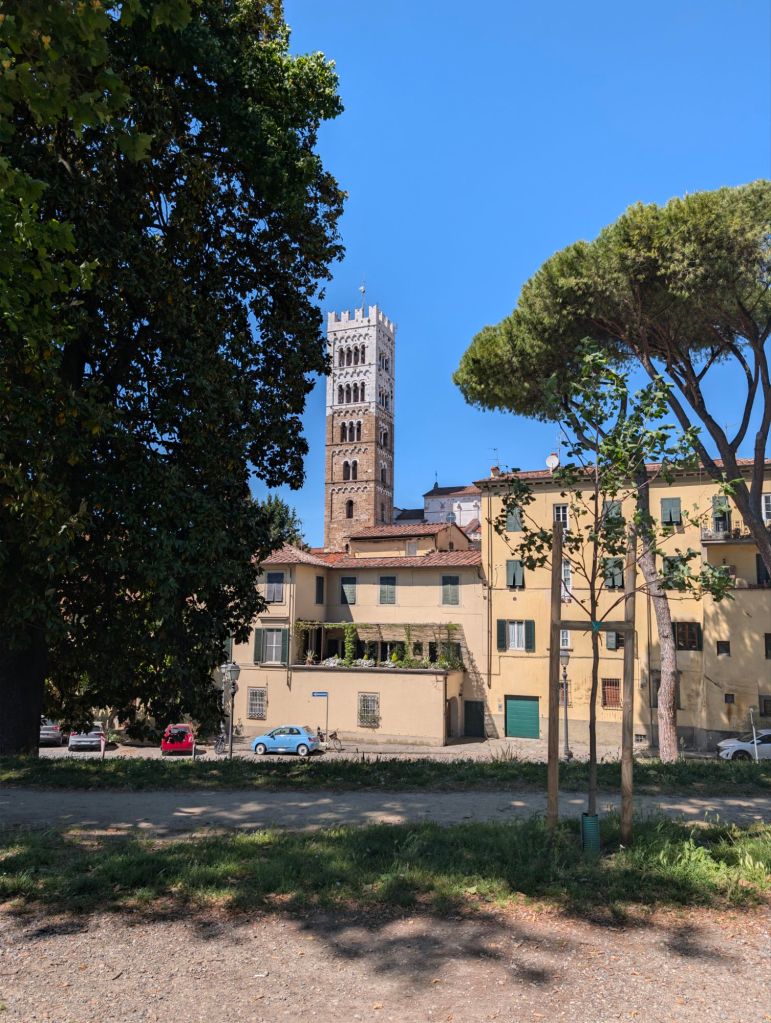
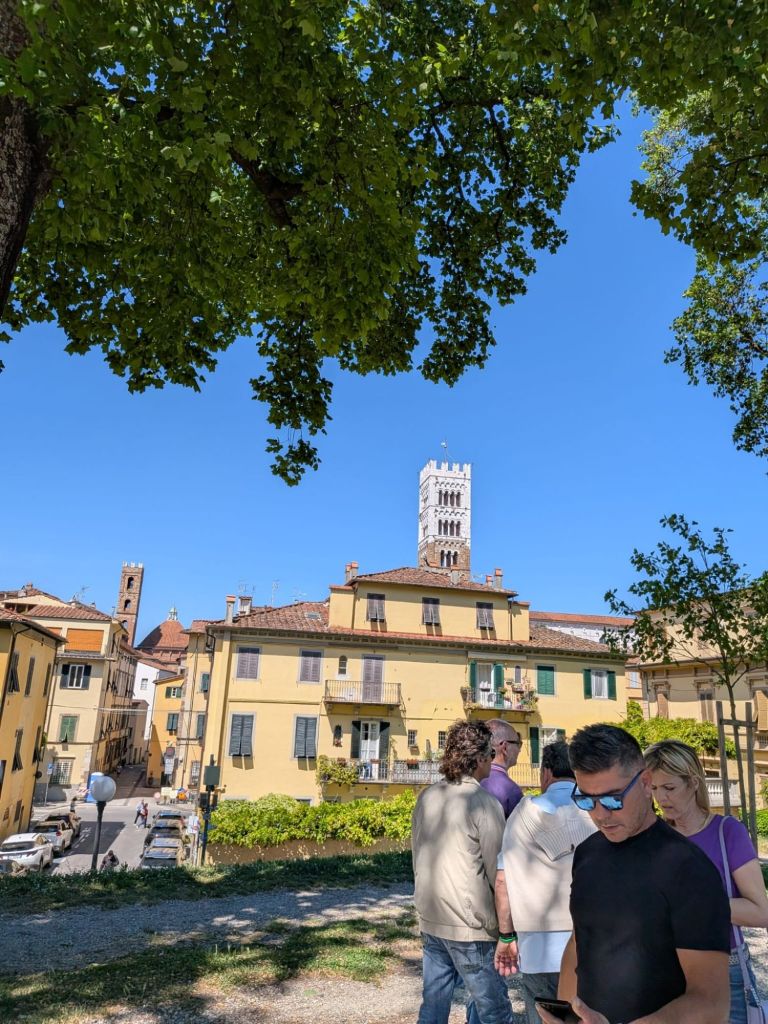
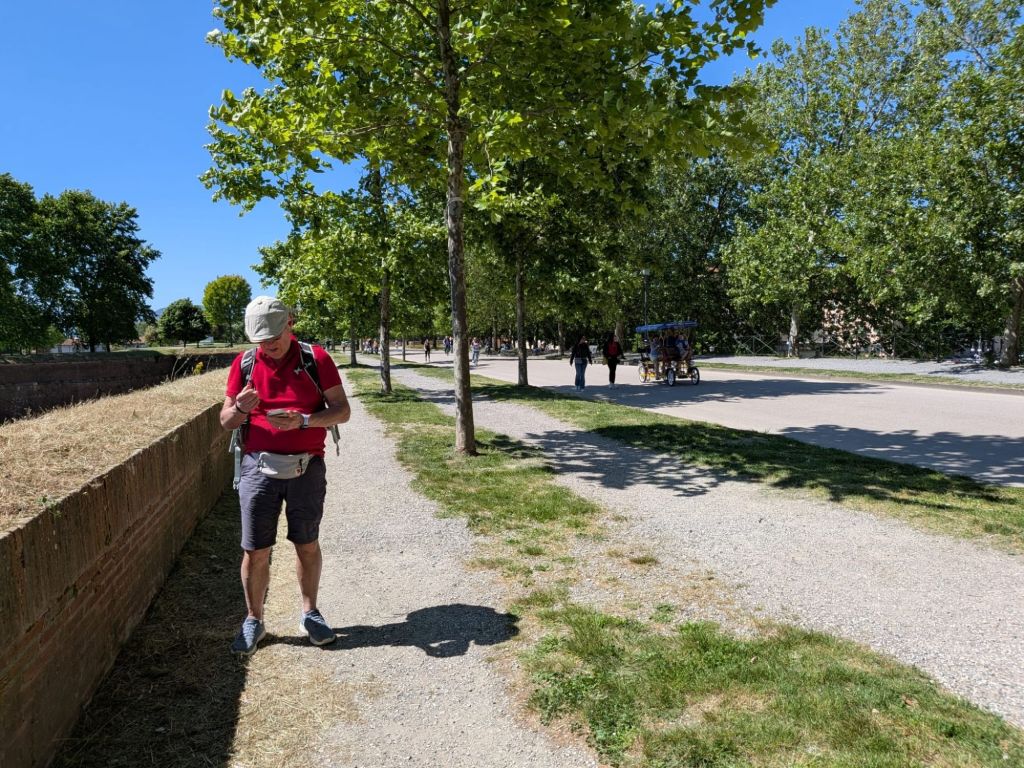
After all this we have to head back to the railway station, get on a train, and go back to Montee thingy-bo-katini .

